
A fixed price can make your budget clearer, but it does not remove every project change or risk. In a fixed price construction contract in London, the agreed sum is set before work starts. The Chartered Institute of Building identifies this as the defining feature of a fixed price contract. With a cost-plus arrangement, the final amount depends on the work and materials used, so costs can change as the project progresses.
It is understandable to want certainty before committing to a major home transformation. The contract details matter as much as the contract type: variations, provisional sums and contingency allowances can all affect what you ultimately pay. This guide compares fixed price and cost-plus arrangements, explains where budget changes can arise, and outlines what to check in the scope, exclusions and payment stages. You will be better placed to choose a structure suited to your project and plan for decisions that may affect its budget.
Key Takeaways
- Compare lump sum, guaranteed maximum price and target cost arrangements by asking who carries overruns and how any savings are shared.
- Keep the scope, exclusions and written variation process clear so you can see how changes to the design or work affect the agreement.
- Separate the fixed contract sum from your own contingency for choices or unexpected conditions, particularly when working with an existing or period property.
- Match the contract structure to the level of design certainty: defined work can suit a fixed sum, whilst unresolved details may need carefully described allowances.
- Understand what each provisional sum covers and how material price fluctuations are treated before relying on the contract total as your project budget.
Fixed Price vs Cost Plus Contracts: What’s Best for Your Project?
A fixed-price construction contract in London can set a defined sum for agreed work, while cost-plus links payment to actual labour and materials. The best fit depends on how settled your design is and who carries the risk of changes.
How contract pricing models work
A fixed-price contract sets the price for specified work before construction starts; cost-plus charges the client for actual project costs. The distinction matters because cost-plus leaves the final amount more exposed to labour hours, material use and delays.
According to the Federation of Master Builders, nearly 70% of small builders in the UK primarily use fixed-price agreements. Under cost-plus, if a job takes 20% longer than estimated, the homeowner pays for the extra hours. If timber rises 12% between quote and order, the client pays the higher price under cost-plus.
Inflation and resource shortages make the contract’s allocation of risk particularly important. A fixed price can place the risk of increased costs for agreed work with the contractor, while cost-plus passes actual expenses to the client. Delayed supplies can also affect labour scheduling and the sequence of construction.
Lump sum, maximum price and target cost
A lump sum sets one price for defined work; the contractor bears costs above it and benefits if delivery costs less. A guaranteed maximum price caps the client’s cost, while savings below that maximum may go to either party or be shared. A target cost sets an agreed target and can share savings and overruns through a pain/gain agreement.
These models distribute risk differently, so the contract should explain how savings and additional costs are treated. A target-cost arrangement does not automatically cap the client’s final payment. The payment mechanism and scope determine what happens when actual costs differ from the target.
In England and Wales, make the written terms clear on scope, payment milestones, variations, dispute resolution and warranties. JCT publishes residential standard forms, including JCT Home Owner and JCT Minor Works. A formal agreement gives both parties a record of the arrangements they have agreed.
Contract quotes and project examples
A quote describes proposed work and its pricing basis; a signed contract records the parties’ agreed terms. For example, a cost-plus quote for a kitchen extension estimates the work and adds a percentage to labour and materials, while a fixed-price quote sets an agreed sum for defined work. Compare inclusions and assumptions as well as the headline amount.
For a fixed-price construction contract in London, agree the scope and specification first, then review exclusions, payment stages and variation terms. Before signing, record the final arrangements in writing, including how relevant events and disputes will be handled. This makes the contract a practical reference when decisions arise during construction.
Variations and relevant events
A fixed-price contract is based on a defined scope, but its terms may allow changes if the scope or specified circumstances alter. Disputes often arise over whether work was already included, who authorised a change and how its effect should be assessed.
Defined scope and project changes
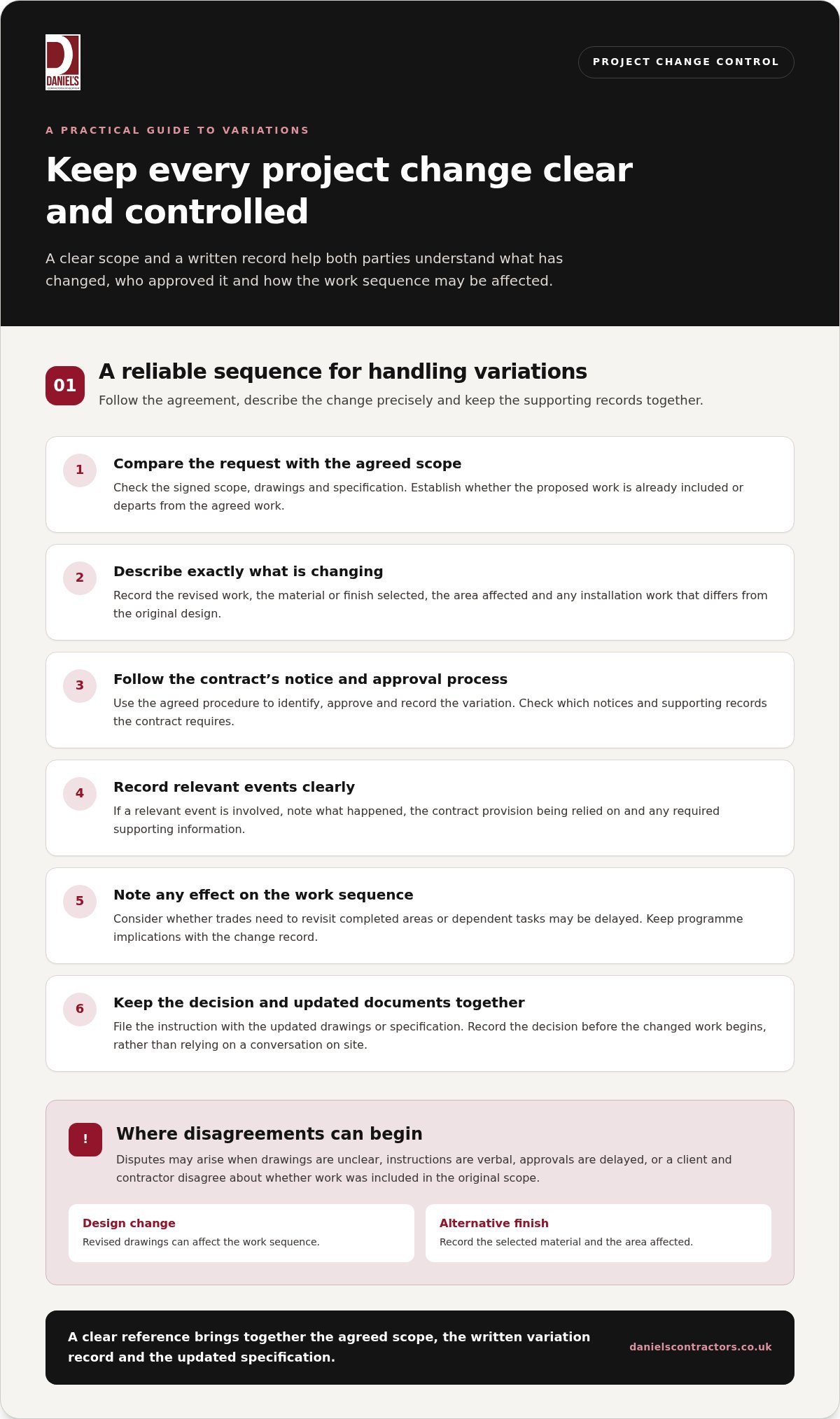
A defined scope records the work included in the agreement, so a departure from it may be treated as a variation. This matters when the client requests a design change or chooses an alternative finish. The contract should set out how changes are identified, approved and recorded before the affected work proceeds.
For example, redesigning two floors changes the original drawings and may affect the work sequence. Even a minor change can have practical consequences if trades need to revisit a completed area or a dependent task is delayed. Record the revised work and any programme implications instead of relying on a conversation on site.
Not every additional task arises from a client instruction. Contract terms may also cover relevant events, provisional sums, fluctuations, nominated subcontractor or supplier payments, statutory fees, and opening-up or testing work. The wording defines which circumstances qualify and what notices or supporting records are required.
Valuing variations
Variation valuation is the method used to assess changed work against the contract. It matters because both parties need a consistent basis for deciding what the change involves. The agreement can explain how existing rates apply or how work that differs from the original specification will be assessed.
For a replacement finish, for instance, the record can identify the revised material, the area affected and any installation work that differs from the original design. Keep the assessment with the instruction and updated specification. This helps distinguish the approved change from work already included in the defined scope.
Document the decision before the changed work begins, including any effect on the construction sequence. If a relevant event is involved, record the event and the contract provision being relied on. A clear record lets both parties follow how the assessment was reached.
Risks and disputes over changes
Disputes can arise when a client believes an item is within the original scope, while the contractor regards it as additional work. Unclear drawings, verbal instructions and delayed approvals make disagreements harder to resolve. The signed scope and variation terms provide the reference for deciding how to treat the work.
Compare each proposed change with the drawings and specification, then follow the contract’s notice and approval process. Record the instruction, agreed description and any effect on sequencing before work proceeds. Keep revised drawings, dated correspondence and site records together to maintain a clear project history.
For a London property, access restrictions or concealed structural conditions may affect how approved work is carried out. Note the relevant site condition and explain how it relates to the contract terms. If the parties disagree, use the agreement’s stated dispute process and refer to the project records.
Budget contingencies for London building projects
A dependable budget starts with a clear picture of the work, the property and what the agreement includes. For a fixed-price building contract in London, drawings, specifications, site access and known structural conditions all affect how the project is planned.
There is no single average figure for this type of project. The scope, materials, structural requirements, access arrangements and level of finish all shape the amount agreed for the work. Compare proposals against the same drawings and specification rather than treating different scopes as equivalent.
Keep your own contingency separate from the contractor’s allowance for carrying out the agreed work. Set aside a reserve for choices you may make or conditions uncovered during construction, especially in a period or listed property. For a 19th-century London home, concealed structure and evolving interior decisions can require careful reassessment as work progresses. The contract should explain how an unexpected condition is recorded and considered.
Review the scope alongside its exclusions. Establish whether scaffolding, VAT, structural engineering, Building Regulations coordination and making good are included, and identify who handles each item. Planning permission and Building Control arrangements should also be clearly allocated, including who prepares submissions and coordinates inspections where required.
Payments should follow completed stages of work, with each stage and its supporting evidence described in the agreement. If the contract includes retention, state what work it relates to, when it is released and how outstanding items are handled. Avoid front-loading payments before the corresponding work is complete. A schedule linked to visible progress makes the connection between payment and delivery easier to follow.
Assess a builder’s credentials by reviewing relevant qualifications, insurance documents and examples of comparable completed projects. Check that the business and insured activities match the proposed work. References can help you understand the builder’s workmanship, communication and approach to handover. A consistent scope and written payment schedule also make it easier to compare proposals fairly.
For a new build, confirm that the design, specification and stated allowances align before agreeing the contract. Keep selected materials and unresolved decisions distinct from fully defined work, so everyone understands which items remain undecided. This helps you manage the project brief without assuming the agreed sum covers every possible choice or site condition.
Choosing a contract for different project types
The contract should reflect how clearly the work is designed and how much uncertainty remains. A new build and a refurbishment may need different approaches, even when both have detailed plans.
Matching contracts to project types
Choose a contract structure that matches the project’s design certainty, risks and decision-making needs. A price structure suited to a fully specified new build may be a poor fit when existing conditions remain unknown.
For a new build, coordinated drawings and a settled specification can support a lump-sum agreement for the defined work. The contract should identify what the sum covers, including agreed materials, workmanship and project stages. A guaranteed maximum price may suit clients who want an upper limit, provided the agreement clearly explains how savings are treated.
A refurbishment of a Victorian home can involve concealed conditions that drawings cannot fully describe. A cost-plus arrangement can account for actual work and materials, but leaves the client with more budget uncertainty. A target-cost model offers another option, with the parties agreeing how to share savings or extra costs.
For a basement conversion or loft project, consider how much investigation has established about the structure and specification. Where significant design choices remain open, a fixed sum based on incomplete information can lead to disagreements about what the scope includes. The pricing model should make the treatment of unknowns clear rather than disguising them in a headline figure.
The project type alone does not determine the contract. A defined extension may be priced differently from a similarly sized extension with unresolved structural design or finish selections. Match the agreement to the information available and to how involved you want to be in cost decisions during construction.
Scope, specification and project value
The scope describes the work; the specification sets out the required materials and finish. Both should reflect the client’s priorities, because unclear descriptions make it harder to compare proposals or assess later changes.
Set a project value limit before choosing the contract structure, then distinguish the agreed build sum from allowances and items outside the scope. For example, a kitchen specification should say whether the contract covers units, appliances, installation and finishing. This prevents an allowance for supplied items from being mistaken for a complete installation.
Use drawings, schedules and written exclusions together. For a London extension, identify the structural work, finishes, access arrangements and any external works included. Then record how design revisions and selections affect the agreed scope. This gives the contract a practical reference throughout the build.
A fixed sum can support budget planning when the design and specification are settled. If they remain open, a cost-plus or target-cost structure may better reflect the project’s uncertainty, but requires clear cost reporting and decision records. The strongest fit is an agreement whose scope, risk allocation and payment basis match the actual project, not simply its label.
Provisional sums and fluctuations
A fixed-price quote is only as clear as its scope, allowances and exclusions. Provisional sums and fluctuations clauses address different uncertainties, so read each term alongside the specification and payment provisions.
A provisional sum is an allowance for a specific element that is not defined in enough detail for tenderers to price. For example, a quote may include an allowance for a finish awaiting selection. Once the details are agreed, the work can be assessed using the contract’s stated valuation method. An allowance is not the same as a fully specified item.
For each provisional sum, establish what work it covers, what it excludes and how any difference will be assessed. If flooring is undecided, clarify whether the allowance includes supply, preparation and installation. Otherwise, an allowance for materials alone could be mistaken for a completed floor finish.
A firm price contract means prices are not subject to fluctuations during the construction period. Alternatively, a contract can include a fluctuations provision to reimburse specified price changes during a project lasting several years. The clause should identify which items may change, what evidence is required and how adjustments are calculated.
JCT standard forms commonly have no provision for price increases. The JCT fluctuations clause is optional and rarely used, so do not assume it applies simply because the contract uses a JCT form. If the contract includes a fluctuations mechanism, establish whether it covers labour, materials or specified supplies, and how increases or reductions are treated.
To understand what a fixed-price quote includes, compare its scope with the drawings and specification. Check whether VAT, scaffolding, Building Regulations work and structural engineer fees are included or excluded. Planning and statutory fees, provisional sums, selected finishes and client-requested changes should also be clearly identified in the contract.
Before signing, match every allowance and exclusion to a specific item in the project documents. A listed-building refurbishment, for example, may require defined repair work and specified materials. If opening-up reveals a condition that changes the work, record the finding and follow the contract’s variation or relevant-event process before proceeding.
For a new build, compare the specification with any provisional sums so each element has a clear status. Keep fully defined items separate from allowances and any adjustment mechanism. This gives you a more useful basis for understanding the agreed scope and how later decisions may affect the contract.
Daniels Contractors: Refurbishment
Daniels Contractors undertakes refurbishments for homeowners planning considered changes to an existing property. If your project involves creating more usable space, Basement Conversions, Loft Conversions and House Extensions may also suit your plans.
A clearly defined scope and specification connect the design with the contract, particularly when existing conditions or finish choices could affect the work. Daniels Contractors uses fixed-price contracts and milestone-based payments, giving you an agreed project sum with payments linked to work stages. This can support clearer budget discussions as your plans develop, while the contract sets out the included work and how changes are handled.
Contact Daniels Contractors to discuss your refurbishment or conversion plans.
Shape your project with a clear brief
Your next step is to turn your priorities into a brief that reflects how you want your home to work, not simply how much work it needs. For a fixed-price construction contract in London, a well-developed design and specification provide a clearer foundation for the agreement and help make decisions about scope more deliberate.
Daniels Contractors undertakes refurbishments, basement conversions and loft conversions, helping homeowners plan transformations around their property and intended use. A conversation can help you outline the work, identify decisions still to make and consider how the contract structure should reflect the project.
Discuss your project with Daniels Contractors and take the next step towards a carefully planned home transformation.
Frequently Asked Questions
How do I get an accurate construction quote in London?
Give the contractor a consistent set of drawings, a written specification and clear information about the property. Include finish choices, known structural constraints and site access arrangements. Ask the quote to distinguish the building work from design coordination, temporary protection, waste removal and making good, where relevant. Comparing quotes against the same information helps reveal differences in scope, not just in headline figures.
What are the options if you are affected by construction cost inflation?
Your options depend on whether you have signed and what the contract says about price changes. Before signing, you can discuss a fluctuations clause, a cost-plus arrangement or a target-cost model, then weigh their effects on budget certainty and risk. After signing, review the agreed terms and raise proposed changes in writing. Do not assume either party can alter the price unilaterally; formally agree any amendment before relying on it.
What is a fixed-price construction contract in the UK?
It is a written agreement that sets an agreed sum for specified construction work before it begins. The contract should also explain payment arrangements and the circumstances that can change the amount, such as approved changes or stated allowances. The fixed sum applies to the work described, not every possible expense connected with the property. Your drawings and specification help establish precisely what the agreement covers.
Which UK standard forms are used for fixed-price construction contracts, such as JCT?
JCT publishes standard forms used for residential building work, including the JCT Home Owner and JCT Minor Works contracts. The appropriate form depends on the work, the parties’ roles and the terms required. A standard form still needs to reflect the project’s scope and agreed arrangements. Read any amendments alongside the main terms, since added or changed wording can affect how payments, changes and responsibilities operate.
How should variations, unforeseen conditions and price changes be handled in the contract?
Set out a written process for instructions, notices, valuation and approval, and keep dated records of decisions and site conditions. For concealed conditions, record what was found and how it affects the proposed work before agreeing on a response. Treat client-requested changes separately from price adjustments covered by a fluctuations clause. A clear audit trail, including revised drawings and correspondence, helps both parties understand the basis for each adjustment.
How do planning permission, building regulations and London access or parking constraints affect a fixed-price project?
Planning decisions and Building Regulations requirements can affect the design, specified work and project coordination included in a quote. In London, restricted street access or limited delivery space can also shape how materials and equipment reach the site. Identify these constraints early and state the assumptions in the project documents. Clarify who coordinates relevant applications and inspections, and how design or access changes are managed.
What payment schedules, retention and deposit terms are typical for London building work?
Payments should be linked to completed work stages, with each stage and its evidence set out in the agreement. A typical deposit is 10-15% at signing; on larger jobs, a 5% retention held for 3-6 months after completion is described as reasonable.