
Choosing a building contractor in London means looking beyond a polished quote. Compare proposals against the same project brief, then weigh each builder’s relevant experience, working approach and suitability for your property. The right choice should make the route from initial plans to finished home clear, while respecting the building’s character and practical needs.
That decision can feel more involved when you’re planning a substantial change to a London home. You may be balancing design ambitions with structural considerations, neighbouring properties and the details that make your home distinctive. A considered choice at the outset gives you a sounder basis for turning ideas into a workable project.
This guide explains how to assess a contractor’s reputation, compare written quotes and understand which credentials matter. It also covers communication, project management and when a smaller builder may be a suitable fit. Use these practical checks to find a contractor whose experience and approach align with your plans in London, Surrey or Essex.
Key Takeaways
- Assess reputation through relevant project experience, references and reviews, rather than relying on a polished first impression.
- Compare written quotes against the same scope, paying close attention to materials, exclusions and how changes will be handled.
- Look for clear communication, named responsibility and a practical plan for keeping you informed as work progresses.
- Check that insurance and credentials match the work involved, including specialist requirements for electrical or gas work.
- A smaller builder may suit an extension or refurbishment when their experience and approach fit your property and project.
1. How do I check if a building contractor in London is reputable?
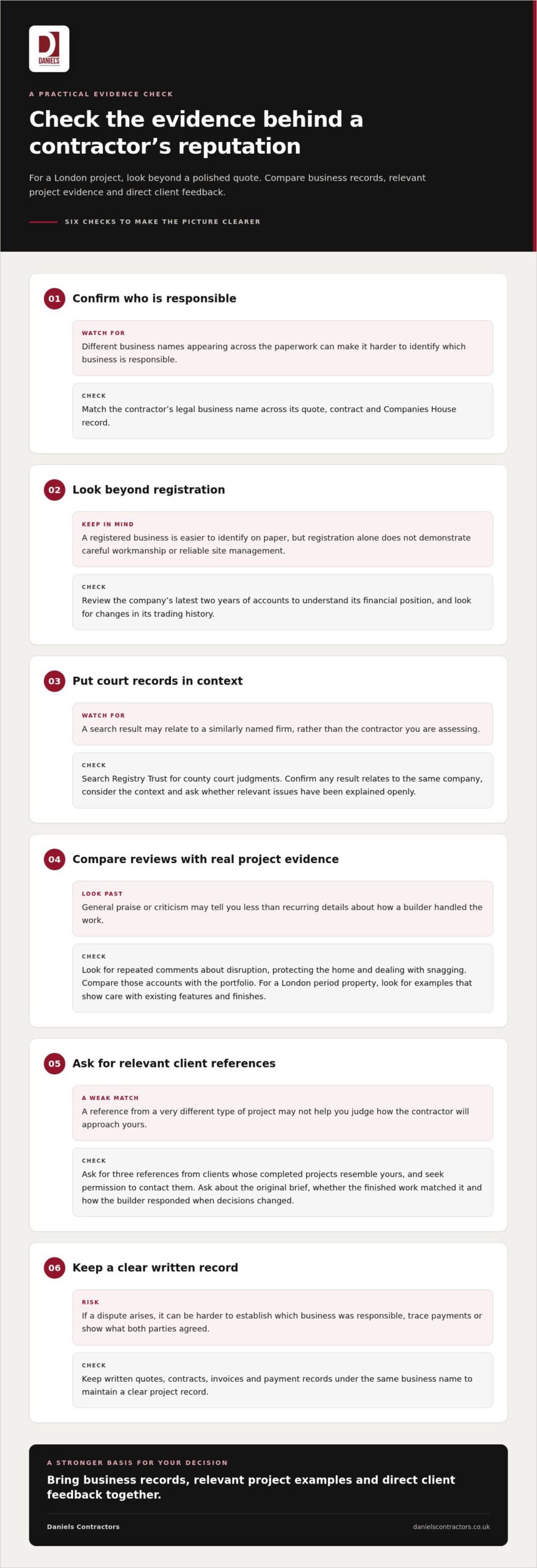
Begin by matching the contractor’s legal business name across its quote, contract and Companies House record. Review the company’s latest two years of accounts to understand its financial position and look for changes in trading history. A registered business is easier to identify on paper, but registration alone doesn’t demonstrate careful workmanship or reliable site management.
Search Registry Trust for county court judgments associated with the business name. Check that any result relates to the same company, not a similarly named firm. Consider the context and whether the contractor has explained relevant issues openly. Treat this as one part of your assessment, alongside business records, project evidence and direct client feedback.
Read online reviews for recurring details, not just praise or criticism. Comments about how a builder handled disruption, protected a home or dealt with snagging can be more revealing than general descriptions. Compare those accounts with the contractor’s portfolio. For a London period property, look for examples showing care with existing features and finishes, rather than relying only on new-build photographs.
Ask for three references from clients whose completed projects resemble yours, and seek permission to contact them. Ask what the original brief involved, whether the finished work matched it and how the builder responded when decisions changed. A reference from a homeowner who had a similar extension or refurbishment can help you judge whether the contractor’s experience transfers to your own project.
What are the risks of hiring an unregistered or cash-only builder in London? It can be harder to establish which business is responsible, trace payments or show what both parties agreed if a dispute arises. Keep written quotes, contracts, invoices and payment records under the same business name to maintain a clear record of the project.
Reputation also depends on whether the contractor represents its experience accurately. Compare project examples with the business responsible for the work. If a firm claims expertise in a particular property type, look for evidence in its completed portfolio and ask references about similar details. Consistent information across records, projects and client accounts gives you a stronger basis for your decision.
Check that tax treatment is explained clearly in the written quotation. According to HM Revenue & Customs, some categories of building work may qualify for a reduced VAT rate of 5%. The applicable treatment depends on the work category, so look for the basis stated in the proposal rather than assuming every renovation receives the same rate.
2. Communication and project management
Before construction begins, establish how day-to-day decisions will be handled. Agree who leads the project, who can approve instructions and how the site team receives updates. This matters when, for example, you select a different kitchen finish after an order has been prepared. The person recording the decision should ensure the relevant trades work from the revised information.
Match the contractor’s experience to the project’s defining challenges. A new build requires coordination across design, site preparation and construction, whilst a refurbishment may involve working around existing structure and finishes. Ask how the team has approached comparable projects and which decisions it managed directly. For new-build work, align design decisions, approvals and procurement in sequence; the approach to new-build project planning can help frame those responsibilities.
Define the scope in practical, observable terms. Instead of saying “finish the bathroom”, describe the surfaces, fittings and expected standard of completion. For a kitchen, specify whether the work includes removing existing units, preparing walls, fitting new cabinetry and completing surrounding finishes. Clear descriptions help the site team understand what should be ready at each stage and show what falls outside the agreed brief.
Set a regular progress rhythm that suits the construction sequence. A weekly update can record completed work, upcoming tasks, decisions needed and any issue affecting the next stage. Agree whether updates come by email, phone or site meeting, and keep a shared record of decisions. For instance, a note confirming lighting-point positions can prevent different trades from working to conflicting assumptions.
Clarify administration and ordering responsibilities before materials are needed. Establish who prepares specifications, places orders, checks deliveries and confirms that items match the approved selection. If bespoke joinery depends on final measurements, identify who measures, who approves drawings and who releases the order. This sequence connects design choices with site readiness and reduces the risk of installing the wrong item.
Agree how questions and issues move through the team. You should know who receives a query, who can make a decision and how urgent site matters are escalated. If the project manager is away, identify an alternative contact and how their decisions will be recorded. These details are especially useful when several trades need to coordinate around one opening, service route or finish.
Finally, establish how progress will be reviewed against the plan. Walk through completed areas with the responsible person, note unfinished details and record agreed next steps. Before a room is decorated, for example, check that preceding work is complete and any required decisions have been made. Regular reviews connect communication to the quality of the finished work.
3. Comparing written quotes, costs and project scope
Ask each contractor to price the same drawings, specification and written scope. London homeowners are advised to obtain three estimates, but the number alone won’t make them comparable. Give each tendering builder the same information about access, existing conditions, finishes and any known structural work. If one quote is based on sketches and another on detailed technical plans, the difference may reflect assumptions rather than better value.
Compare the full breakdown, not just the total. Check whether labour, materials, preparation, waste removal, making good and finishing work appear in each document. For example, one extension quote might include internal plastering, whilst another covers only the shell. Read exclusions carefully, and ask how provisional allowances are treated. A low figure can hide omitted work or lower-grade materials. A quote 30% below competing quotes is a warning sign in central London’s luxury market.
Use a simple comparison table to record each contractor’s proposed materials, scope, exclusions, payment stages and process for changes. Note where specifications differ, such as window material, flooring finish or the extent of kitchen preparation. Ask for written clarification before comparing totals. The aim is to identify what each builder has allowed for, not to assume similar wording means identical work.
Local experience matters when a project involves London’s varied property types and constraints. Look for completed examples comparable in age, design and complexity, such as a basement conversion in a terraced house or a period-property refurbishment. Ask what the contractor managed directly and which specialist trades were involved. Familiarity with local architecture and site conditions can inform planning, sequencing and practical decisions that affect delivery in London, Surrey and Essex.
Compare credentials with the work specified. Electrical and gas work calls for appropriately qualified professionals, while structural alterations may require coordination with an architect or structural engineer. Check that the names and roles in the proposal are clear, and distinguish the main contractor’s experience from that of subcontractors. This helps you assess whether the team’s skills match each part of the scope.
References should relate to similar work, not just completed projects of any kind. With the homeowner’s permission, ask past clients about workmanship, communication, changes and how the result matched the agreed specification. A reference for an architect-managed project can also clarify how the contractor coordinated drawings and decisions. Compare those accounts with the portfolio and written quote, then weigh relevant experience, clarity and specified quality alongside the proposed total.
4. Insurance and contractor credentials
For a London homeowner, insurance evidence should be current and relevant to the work. Ask for the contractor’s public liability insurance certificate and check the insured business name, policy dates and activities covered. Guidance for London clients recommends at least £5 million of public liability cover. This provides a clear starting point for checking the policy, rather than relying on a verbal assurance.
How do you check a building contractor’s credentials and insurance in London? Ask for copies of current insurance documents and relevant qualifications, then match the names and work categories to the people doing each task. For example, check that any gas engineer has Gas Safe registration and the appropriate categories on their card.
Qualifications depend on the work involved. Construction-related evidence may include NVQs or Level 2/3 diplomas in building trades, while a CSCS card can provide evidence of health and safety training. For electrical or gas work, check the specialist credentials relevant to that work. A general building qualification does not, by itself, demonstrate competence in every trade.
Trade-body membership is another point to assess, alongside practical evidence. The Federation of Master Builders sets standards for its members. Ask which named business holds the membership and whether it applies to the contractor you intend to hire. Then compare that information with the project experience and references you have gathered.
Put the working arrangements into a written contract before construction starts. It should identify the parties, describe the agreed work, state how payments and changes will be handled, and explain how to raise concerns or defects. Check whether a warranty is offered, who provides it, what it covers and how to make a claim. Insurance and a warranty serve different purposes, so keep their documents and terms distinct.
If a contractor proposes subcontractors, clarify who holds insurance for each specialist task and who remains responsible for coordinating the work. An extension, for instance, may involve separate electrical and gas work. Record the relevant business names, qualifications and insurance details in your project file, alongside the contract and written instructions.
How do you resolve disputes or report poor building work by a contractor in England? Photograph the issue, keep dated correspondence and notify the contractor in writing, following the complaint and remedial-work process in your contract. If the dispute remains unresolved, adjudication is a dispute-resolution mechanism available to parties to a construction contract in England.
Keep a single, organised record of certificates, contract documents, agreed changes and site concerns. This paper trail helps you track what was agreed and identify the right person to contact if an insurance, qualification or workmanship issue arises.
5. Working with small builders on home extensions and refurbishments
A smaller building firm can suit a London extension or refurbishment when its experience matches the work. A more personal approach may make it easier to discuss details, while a smaller team can offer flexibility around site conditions. These benefits depend on clear responsibilities, availability and organisation of specialist tasks. Assess the specific team and project plan, not the firm’s size alone.
Define the work before requesting a quote. Give the builder detailed architectural plans and technical information, including structural proposals, finishes and access constraints. For a rear extension, note which rooms will be affected, how the new space connects to the existing house and what making good should include. Clear information helps the builder prepare an accurate, comparable proposal.
Allow time for a considered response. A detailed and accurate quote from a small builder in London may take 2–4 weeks to prepare. The time reflects the need to review drawings, inspect the property and clarify assumptions. A rushed estimate based on a brief conversation may leave important elements open, particularly where an older home contains concealed or irregular features.
Victorian and Edwardian homes can require specialist knowledge when renovation work alters the structure or meets original details. Ask how the builder has approached comparable properties, such as protecting existing brickwork or coordinating a structural opening. For a period home, relevant examples should show care for the building’s character as well as sound workmanship. Check that proposed materials and details suit the existing fabric.
Clarify approval and neighbour considerations before work starts. Some alterations may require building regulations approval, planning permission or input from a structural engineer. For an extension near a shared boundary, ask about the builder’s experience with the Party Wall Act. Where Building Regulations apply, agree the building-control route and inspection stages before concealed work begins, such as closing a floor or wall.
For a small firm, ask who will supervise site work, arrange specialist trades and order materials. Confirm how the team will handle changes if opening a wall reveals conditions that differ from the drawings. Put instructions in writing and agree how revised work will be assessed before it proceeds. This creates a clear record for both parties and helps maintain coordination.
Choose a builder whose completed projects, technical understanding and working style fit your home. If you’re planning a London extension or refurbishment, discuss your project requirements and the details that will shape its scope.
Daniels Contractors: Refurbishment
Daniels Contractors can help with a considered refurbishment for your London home, tailored to the property rather than a one-size-fits-all approach. The company also carries out basement conversions, loft conversions and house extensions, helping homeowners reshape existing space or add new living areas.
Bring your plans, priorities and questions to the conversation. A clear brief helps define the project’s scope, from preserving period details to improving how rooms work for your household. Start by discussing the property and the changes you want to make.
If you’re planning a refurbishment or conversion, contact Daniels Contractors to discuss your project.
Take the next step with a clear project brief
Choosing a builder is also an opportunity to define what you want your home to do better. Before committing, set out your priorities: how each room should function, which original details matter and what level of finish suits your property. This gives your first project conversations a practical focus and helps turn broad ideas into decisions you can assess together.
Knowing how to choose a building contractor in London means looking beyond the immediate works to how they’ll shape daily life at home. Daniels Contractors delivers refurbishments, basement conversions and loft conversions, with each project shaped around the property and your aims. A well-defined brief helps you explore the right direction while preserving the character and integrity of your home.
If you’re ready to consider the next stage, start a project conversation with Daniels Contractors. Your ideas can form the basis for a thoughtful plan and a home that feels distinctly yours.
Frequently Asked Questions
How do I check if a building contractor in London is reputable?
Cross-check the contractor’s business identity against the name on its paperwork, then look for independent evidence that supports its claims. A useful extra step is to compare the people and work shown in its portfolio with the details in client references. For a London period home, seek feedback from someone whose property had similar constraints. Note any differences between the completed work described and the contractor’s own account.
How to Hire a Good Builder?
Begin with a clear project brief, then shortlist builders whose completed work resembles your plans. Arrange a site discussion so the builder can understand access, existing conditions and your priorities. Ask who will supervise the work and how decisions will be recorded. Before appointing anyone, read the written contract carefully, including how changes are authorised and defects are reported. A considered process helps you assess the working relationship as well as the proposed work.
Do I have to pay any money up front, and if so, how much?
An upfront payment may form part of an agreed construction contract, but there isn’t one amount that suits every project. Ask what the payment covers, when it is due and how later payments relate to completed stages. Make sure the schedule appears in the contract and matches the work sequence. Avoid paying for labour in advance, and keep a record of invoices and payments made.
Do construction companies handle planning permission?
Some construction companies guide clients through planning and manage the application process, but confirm who is responsible for each step in your project agreement. Whether permission is needed depends on the proposed design and property location. Daniels Contractors’ design services include guidance and handling of permissions. Clarify who prepares and submits the application information and how any council response will be managed before work proceeds.
How do I choose a construction company in London?
To decide how to choose a building contractor in London, compare the company’s relevant project experience, contract clarity and approach to communication. Consider how its proposals respond to your property, not just whether the scope sounds familiar. A home with heritage features, for example, may need a team comfortable coordinating sensitive details. Choose a company whose working method suits your priorities and whose written terms explain responsibilities clearly.
How much deposit should I pay a contractor before work starts on my London renovation?
There is no universal deposit amount for a London renovation. The figure and purpose should be agreed in writing, with the contract explaining how it relates to mobilisation or materials. Check whether the payment is credited against the contract sum and what evidence supports it. Keep payments traceable, and avoid paying labour upfront. A clear schedule should show what each payment relates to and when it becomes due.
What are the red flags when getting quotes from builders in London?
Be cautious if a quote leaves key work undefined, relies on verbal assurances or gives no clear process for approving changes. A request to pay into a personal account or in cash also deserves scrutiny. Before accepting, check that the quote identifies the business, describes the proposed work and explains exclusions. If drawings or specifications differ between proposals, ask for written clarification so you’re comparing equivalent work.
Should a London building contractor be a member of an accredited trade association?
Trade association membership can offer an additional indication of professional standards, but it doesn’t replace checks on project experience, insurance and relevant qualifications. The Federation of Master Builders sets standards for its members. Confirm that membership belongs to the business you’re considering, then assess the evidence it provides for your specific work. Specialist tasks still require appropriately qualified professionals, whether or not the main contractor belongs to an association.