
An extension doesn’t automatically come with a structural warranty, and one isn’t a legal requirement in the UK. A structural warranty for house extensions can last 10 years from practical completion, while building control approval remains required. The distinction matters if serious defects emerge later.
It’s understandable to expect a new extension to have long-term protection built in. In practice, warranty cover and the builder’s contractual responsibilities are separate, and a mortgage lender may require a warranty for a major renovation or when a property is sold within 10 years of the work.
This article explains whether a structural warranty for house extensions can cover your project, what the policy may protect against, and how its defect and structural insurance periods work. You’ll also learn when lender requirements may affect a sale, so you can understand the available protection before construction begins.
Key Takeaways
- Understand how warranty cover differs from a builder’s contractual responsibility for defects.
- Learn how a policy’s early defects period and later structural cover may affect what it protects.
- See why warranty documentation can matter when mortgage lenders assess a property or a future sale.
- Explore how carefully planned house extension work can support structural integrity from design through construction.
Can You Get a Building Warranty for an Extension or Renovation?
Yes. UK providers offer structural warranties for extensions, renovations and conversions, although eligibility and cover depend on the project and policy. Some policies begin on day one, without a separate defects period.
Eligible Project Types
Providers may assess new builds, conversions, house extensions and high-value or one-off projects. The policy should describe the actual work, rather than assume every project is like a standard new home.
For a conversion, the existing structure and proposed alterations shape the assessment. An unusual extension may need specific terms that clearly identify the covered work. A construction professional can help present the project scope and design information so the provider assesses the actual build.
When Cover Begins and How Long It Lasts
Day-one cover starts without a separate two-year defects period. The policy defines which defects qualify and when you can claim, so make sure its start date and scope are clear before construction begins.
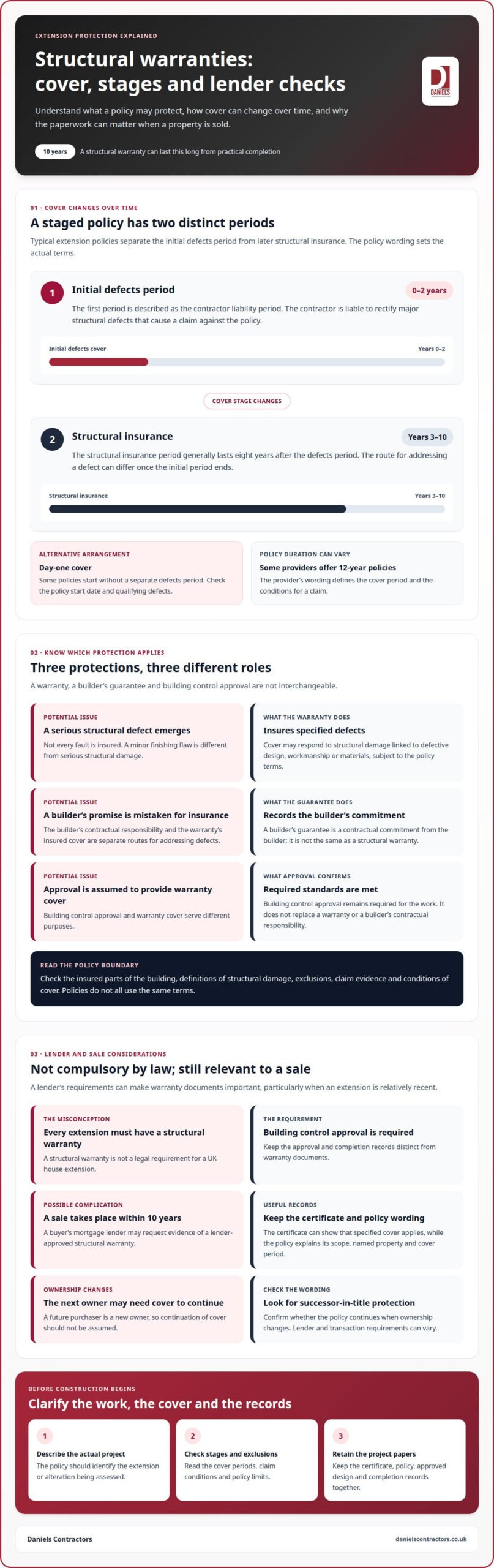
Other policies divide protection into stages: a typical extension warranty has an initial defects period of 0-2 years, followed by structural insurance for years 3-10. Some providers offer 12-year policies. These staged arrangements assign responsibility differently over time.
Warranties, Guarantees and Approval
A structural warranty insures specified defects; a builder’s guarantee is a contractual commitment from the builder. Building regulations approval confirms that the work meets required standards. Each serves a different purpose, so none replaces the others.
Standard home insurance is unlikely to cover a structural problem in an extension that emerges within 10 years of completion. The builder’s contractual obligations and the warranty’s terms determine separate routes for addressing defects.
Choosing a Provider and Arranging Cover
A construction professional can help compare UK providers by reviewing policy scope, exclusions, cover periods and financial ratings. For a conversion, an A-rated provider is recommended. The extension’s design, structural details and construction stage can affect the provider’s assessment.
Cover can be arranged before construction or during the build. A professional can coordinate the application and provide design and project information for assessment. Starting early helps align the policy with the planned work and construction milestones.
What’s Covered by a Structural Warranty?
A structural warranty protects against specified structural defects, not every fault in a residential project. The policy wording defines which damage qualifies and how responsibility changes over time.
Defects and Insurance Periods
Typical extension policies divide cover into an initial defects period of 0-2 years and structural insurance for years 3-10. This distinction matters because the route for addressing a defect can change after the initial period.
According to Build Warranty Insurance Services Ltd, the Code describes the first 2 years as the contractor liability period, when the developer is liable to rectify major structural defects that cause a claim against the policy. The structural insurance period generally lasts eight years after the defects insurance period.
Cover may respond to structural damage linked to defective design, workmanship or materials, subject to the policy terms. For example, a serious failure involving the extension’s structure is different from a minor finishing flaw. Clear records of the approved design and completed work help establish what the policy covers.
Exclusions and Limitations
Exclusions and limits define when structural protection applies. They matter because a warranty only responds to defects within its insured scope that meet its claim requirements.
There is no single exclusion list for every extension policy. Definitions of structural damage, insured parts of the building, claim evidence and conditions of cover can vary. Read these terms alongside the stated insurance period, rather than assuming every construction defect qualifies.
Peace of mind comes from understanding the distinction between major structural damage and other workmanship concerns. The warranty’s stated terms explain the boundary. For a project, careful extension planning can help clarify the structure and work being covered.
Mortgage lender requirements
A structural warranty isn’t a legal requirement for a UK house extension. Building control approval is required, and a buyer’s mortgage lender may still request warranty evidence when assessing a property.
This difference matters most if you plan to sell within 10 years of completing the extension. A buyer may need a lender-approved structural warranty to secure a mortgage. Without suitable documentation, the lender’s requirements can affect the sale, even though the warranty itself isn’t compulsory.
Lenders assess the security behind a mortgage, including the property’s condition and relevant paperwork. A structural warranty certificate can show that specified cover applies to the extension. Its value depends on the policy scope, named property and cover period, so the certificate alone won’t explain every limitation.
Check whether the policy includes successor-in-title protection. A future purchaser is a new owner, so the wording should make clear whether cover continues when ownership changes. This can matter to both the buyer and lender if the extension is still within its warranty period. The seller’s original documents help show what protection was issued.
For a major renovation, a lender may also require warranty cover as a lending condition. Requirements vary between lenders and transactions, so there is no single rule for every mortgage. The project type, extent of structural work and available warranty documents all help shape the assessment.
Keep the warranty certificate and policy documents with the extension’s completion records. If a sale is planned within 10 years, these papers can help the conveyancing process establish the cover’s duration and scope. They also distinguish insured structural defects from building control approval, which confirms a separate aspect of the work.
Structural warranty for extensions and renovations
A structural warranty can cover an extension or renovation, but the work, timing and policy terms shape the protection. In the UK, it isn’t a legal requirement for an extension. Building work may also need to meet applicable regulatory standards. These are separate safeguards with different purposes.
For a new extension, the warranty period is 10 years from the structure’s practical completion. This date matters because it sets the cover’s starting point. A two-storey extension, for example, may have structural issues emerge after handover, when the build is no longer under day-to-day construction oversight. Standard home insurance is unlikely to cover a structural problem arising within 10 years of project completion.
Renovations and conversions need careful consideration too. A policy for a new home may not automatically fit work to an existing property. The distinction between retained structure and newly built elements can affect what the warranty insures. A specialist can help define the work clearly, so the application reflects the actual design and construction rather than describing the project too broadly.
If the work is complete, retrospective warranty cover may be available for an extension or renovation finished within the previous ten years. The assessment may depend on the project’s age, construction records and evidence of the completed work. This differs from arranging cover before construction, when the provider can assess the design and build as they progress.
For a planned extension, discuss warranty arrangements during design, before construction begins. This gives the provider time to assess the proposed structure and clarify the policy scope. For a completed renovation, gather the relevant project documents for assessment. In either case, the certificate and policy wording should identify the insured work and cover period.
If you’re planning a renovation or extension, discuss your house extension project as part of the design process.
Daniels Contractors: Loft Conversions
Daniels Contractors specialises exclusively in loft conversions for homeowners in London, Surrey and Essex planning a considered change to their property. If you’re weighing warranty arrangements alongside the design and construction scope, consider these details together from the outset.
A well-planned loft conversion should suit the existing home, its structure and how you want to use the new space. Daniels Contractors brings these practical considerations into each project, with a focus on design quality and workmanship.
If you’re ready to discuss a loft conversion for your home, contact Daniels Contractors.
Plan your next project with clarity
Treat the warranty decision as part of planning your project, not as an afterthought. A structural warranty for a loft conversion should be considered alongside the design, construction scope and records describing the finished work. This gives you a clearer basis for discussing protection and planning the build.
If your plans extend beyond one area of the home, the overall brief may also include a loft conversion and associated refurbishment. Considering these elements together can help create a coherent design and define the intended work from the outset.
Daniels Contractors can discuss your loft conversion plans. Contact Daniels Contractors about your loft conversion to talk through a considered next step for your home.
Frequently Asked Questions
How does it differ from building and contents insurance?
A structural warranty and home insurance are separate forms of protection, each governed by its own wording. The warranty relates to qualifying defects in insured construction, while building and contents cover responds to events and losses listed in the home policy. Read both documents together, paying attention to the insured property, exclusions and how each policy handles damage affecting more than one part of your home.
What if my extension has already been built?
Gather the extension’s drawings, structural calculations, completion paperwork and dated photographs. These records help an insurer understand what was built and how the completed structure relates to the original property. Include details of later alterations, since they may affect the assessment. Keep the documents together to make the project’s history clear when the completed work is reviewed.
Who can support you with defects?
A structural engineer or Chartered Building Surveyor can assess whether visible cracking or movement indicates a structural concern. They can record the location and condition of the symptoms, distinguishing observed damage from assumptions about its cause. Keep dated photographs and notes of any changes with the report. This gives the builder or insurer clearer information when considering the issue.
How can a construction professional help me choose an ‘A’ rated insurer?
A construction professional can prepare information for insurers, such as drawings, foundation design, structural calculations and the proposed construction sequence. Consistent details make it easier to compare how policies address the same extension. They can also clarify which documents the application needs and help keep the insurer’s assessment aligned with the design as the project develops.
What does a structural warranty for a house extension cover in the UK?
A structural warranty covers qualifying damage to the parts of the extension identified in the policy. Before relying on it, check the schedule for the insured structure, claim conditions and required evidence. For example, a report identifying the affected part can explain the issue clearly. The policy wording determines whether the reported damage meets its terms.
How long does structural warranty cover last for a house extension?
The policy sets the cover period, with the relevant dates recorded in its schedule or certificate. Check how it defines the start of cover and whether it separates different phases or responsibilities. Keep the completion record with the policy papers so you can establish the date if a future claim or property transaction requires it. The written terms determine when cover ends.