
What makes a build run smoothly is not simply having skilled trades on site. It also takes clear responsibility for decisions from design through to handover. If you’re planning a home extension, conversion, refurbishment or new build, it can be difficult to compare a main contractor with a separate project management consultancy. Choosing a construction company with project management Essex homeowners can rely on means looking for clear responsibilities as well as quality workmanship.
It’s reasonable to want a clear brief, a realistic programme and regular communication before work begins. This guide explains what joined-up project management involves and how a main contractor can bring design, planning, construction coordination and delivery together, with a clear point of contact throughout. You’ll also learn what to look for in a scope, itemised quotation and timeline, and how UK building regulations and building control coordination fit into the process. Daniels Contractors & Development Ltd. delivers residential and commercial projects across Essex, London and Surrey, with clear project arrangements designed to keep decisions and responsibilities understandable.
Key Takeaways
- Understand how a main contractor can coordinate design, trades and construction, and how this differs from an independent project management consultancy.
- Follow the typical route from defining your brief and developing designs to construction and handover, with timing shaped by the project’s scale and complexity.
- Use scope, accountability, communication, compliance and delivery as practical points of comparison when assessing a builder in Essex.
- Prepare property details, intended outcomes and known constraints to support a clearer brief and more informed decisions about scope and milestones.
- Learn what to expect from a construction company with project management Essex homeowners can turn to for bespoke building and renovation work.
What Does a Construction Company with Project Management in Essex Actually Manage?
Construction project management connects the brief, design, people, decisions and delivery. In practical terms, it turns your goals for a property into an agreed scope of work, organises the steps needed to carry it out and keeps communication moving as the project develops. Construction management covers these functions across a build, but who is responsible for them depends on the contract and project structure.
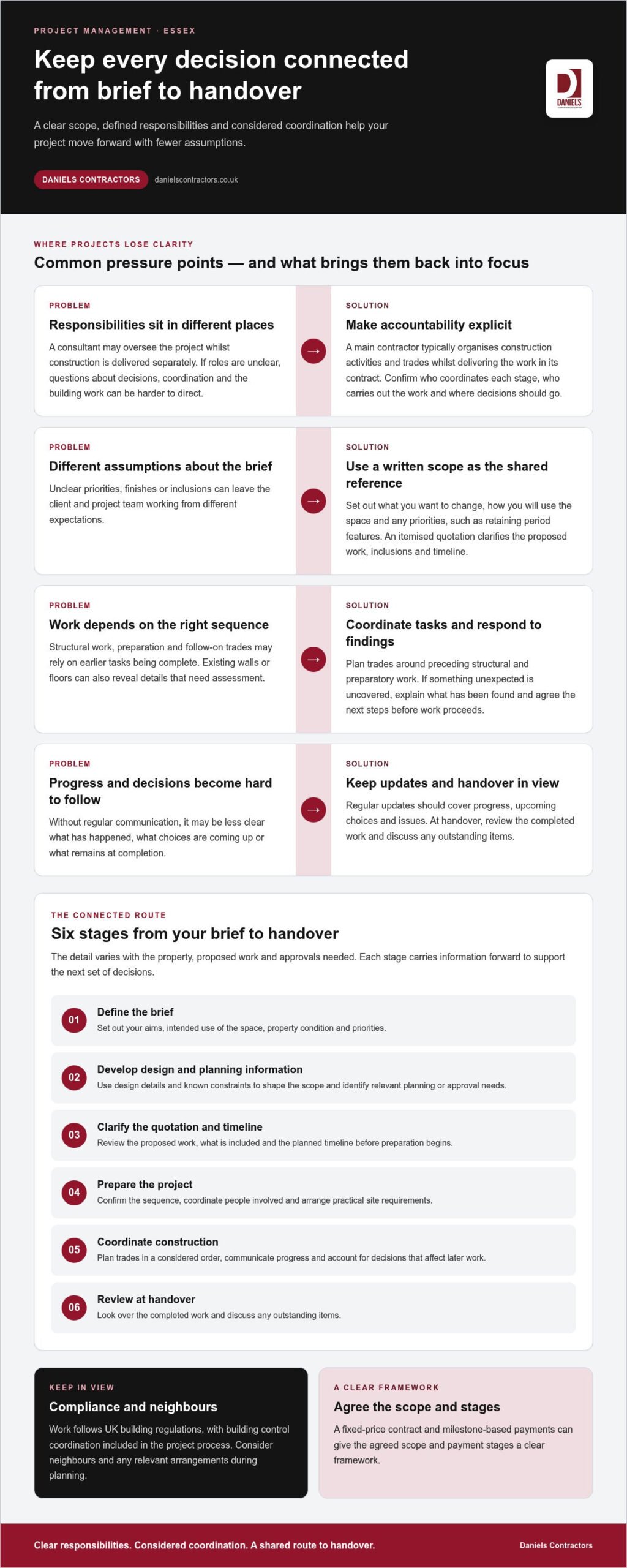
A construction company with project management Essex homeowners choose should connect its coordination role to clear accountability for the building work. A main contractor typically organises construction activities and trades while delivering the work covered by its contract. An independent project management consultancy usually acts on the client’s behalf to oversee the project, while construction is delivered under a separate arrangement. The distinction matters: oversight and hands-on construction delivery are related, but they are not the same responsibility.
With a main contractor, you have a direct route for discussing construction decisions and progress. With a separate consultant, the consultant’s oversight and the contractor’s delivery sit with different parties. Either structure can work, provided the scope and responsibilities are clear. You should know who coordinates each stage, who carries out the work and where questions or decisions should go. This helps reduce the risk of gaps between the design intent and what is built.
What does project management cover from brief to handover?
The brief sets out what you want to change, how you intend to use the space and any priorities, such as retaining period features. It informs the design and planning process, then helps define the work, construction sequence and key decisions. A written scope gives you and the project team a shared reference, reducing the risk of different assumptions about finishes, responsibilities or what is included.
During delivery, regular updates should help you understand progress, upcoming choices and any issues uncovered as work proceeds. At handover, the focus shifts to reviewing the completed work and discussing any outstanding items. A methodical process makes decisions easier to follow, with explanations you can act on.
When does an Essex project benefit from joined-up management?
Coordination is especially valuable when a project combines structural alterations with an extension, or when a full refurbishment involves several rooms and trades. For example, opening up a ground floor may depend on structural design, preparation and installation taking place in the right order. A basement or loft conversion also calls for careful planning around the existing building and how the new work connects to it.
Existing property conditions can affect the sequence of work. Opening up a wall or floor may reveal details that need assessment before the next stage proceeds. A considered approach allows the team to explain what has been found and agree the next steps rather than relying on assumptions. Where neighbours may be affected, their interests and any relevant arrangements should be considered during planning. All work follows UK building regulations, with building control coordination included in the project process.
How Construction Project Management Moves from Design to Build
A well-managed project moves through connected stages, with decisions made at the right time and information carried forward. The sequence generally covers the brief, design and planning, quotation, preparation, construction and handover. The detail within each stage depends on the property, the proposed work and any approvals needed. A refurbishment of an existing home, for example, may need different preparation from a new build, so no single programme suits every project.
For a construction company with project management Essex homeowners can depend on, the process should make clear what happens next and which decisions need your input. Staged decisions keep you informed. You can review the information for each phase, understand its implications and agree the next steps before work moves forward.
From project brief to itemised quotation
Planning starts with your aims, the property’s condition and the finish you have in mind. Design information and known constraints help shape the scope and identify where planning or other approvals may be relevant. An itemised quotation sets out the proposed work, what is included and the proposed timeline, helping you understand the plan before construction preparation begins.
A fixed-price contract and milestone-based payments can give the agreed scope and payment stages a clear framework. Before work starts, preparation may include confirming the sequence, coordinating the people involved and arranging practical requirements for the site. If a decision or approval affects a later activity, the programme should reflect that dependency rather than assume every task can proceed at once.
Construction coordination, changes and handover
During construction, trades and relevant specialists need to work in a considered sequence. Follow-on work, for instance, should be planned around the completion of preceding structural or preparatory tasks. The project team should keep you updated on progress and explain decisions that require your input. This gives you a clearer view of what is happening on site and helps prevent important choices being left until the last moment.
All work follows UK building regulations, with building control coordination included in the delivery process. If opening up the property reveals an unexpected condition, the team should explain what has been found, how it may affect the work and what options are available. This provides a clear basis for agreeing any changes, without suggesting that every project will proceed without unforeseen issues.
At handover, the completed work is reviewed and any outstanding points are discussed, giving you an opportunity to understand the finished project and next steps. The time needed to reach this stage varies with the project’s scale, complexity and approvals. For a bespoke project, Daniels Contractors’ construction services bring design and construction coordination into one considered process.
How to Compare Essex Construction Companies with Project Management
Project management is more than fitting trades into a calendar. It connects the agreed scope, design decisions, communication and construction responsibilities, so you can see how choices affect the work as a whole. When comparing a construction company with project management Essex homeowners might appoint, look beyond a general promise to “manage the build”. Focus on what the arrangement covers and who is accountable for delivering the construction.
A main contractor coordinates the building work it has agreed to deliver, including the construction team and relevant specialists. A separate project management consultant generally provides oversight on the client’s behalf, while construction is carried out through a separate contract. The right structure depends on the project and the responsibilities set out in each agreement. This comparison can help you understand the distinction:
| Main contractor with project coordination | Separate project management consultant | |
|---|---|---|
| Scope | Coordinates work included in its construction agreement. | Oversees the project within the consultancy appointment. |
| Accountability | Responsible for delivering its agreed construction work. | Provides oversight; construction delivery sits with the appointed contractor. |
| Communication | Can provide a direct contact for construction decisions and progress. | May communicate between client and contractor as part of its oversight role. |
| Compliance | Coordinates compliance and building control arrangements for its work. | Can oversee compliance matters within the agreed consultancy scope. |
| Construction delivery | Organises and carries out the contracted building work. | Does not, by oversight alone, carry out the building work. |
Who holds responsibility for the work and communication?
Clear accountability means you know who to approach about progress, a design decision or a construction issue. A single project contact can help keep communication between you, design professionals and the construction team joined up, rather than leaving you to relay information between separate parties. Written scope and agreed milestones provide shared reference points: the team can track what has been agreed, and you can see when decisions or updates are due.
Read the proposed responsibilities alongside the scope. A renovation, for example, may involve design input, specialist work and construction activity. A clear agreement should distinguish coordination from delivery, so no one assumes another party is handling a key task.
What evidence supports a credible local contractor?
Relevant experience is most useful when it relates to the work your property needs. A contractor familiar with extensions, conversions, refurbishments or new builds can explain how its approach responds to the demands of that project type. Daniels Contractors & Development Ltd. delivers bespoke work across Essex, London and Surrey. Its construction services are carried out by qualified, certified and fully insured professionals.
Compliance should be part of delivery, not an afterthought. All work follows UK building regulations and includes building control coordination. Clear communication about the project scope, responsibilities and progress helps you understand how these requirements are being handled. When considering any contractor, make sure the proposed responsibilities and relevant credentials are clear.
What to Clarify Before Appointing a Project-Managed Builder in Essex
A clear starting brief helps a builder understand what you want to achieve and identify what needs to be resolved before work is planned. You don’t need every design decision settled, but sharing what you know about the property, your priorities and any constraints makes early discussions more useful. It also gives you a stronger basis for comparing proposals from a construction company with project management Essex homeowners may appoint.
Prepare a useful project brief
Describe how you want the finished space to work, as well as how you want it to look. For an extension, explain how the new space should connect with the existing rooms. For a refurbishment, note the areas and finishes that matter most. Gather available drawings, surveys and relevant property information, and flag known structural concerns or previous alterations.
Consider practical conditions early. Restricted access, your plans for occupying the home during construction and the proximity of neighbours can all affect how work is prepared and sequenced. If the property is listed, in a conservation area or has heritage features, identify these details at the outset. They can influence design choices, suitable materials and which approvals may be relevant. The project team can then take these factors into account rather than treating them as late additions.
- List the rooms, functions and finishes you want the project to address.
- Share drawings, surveys and information about the property’s condition.
- Note access arrangements, occupancy plans and potential neighbour considerations.
- Identify heritage features, structural questions and approvals already known to you.
Agree communication and project controls
Before appointment, make sure the proposed scope describes the work clearly enough for you to understand what is included. An itemised quotation and proposed timeline help connect the work to its planned sequence. Confirm the main point of contact and how updates, decisions and any changes will be communicated, so you know how to raise questions as the project progresses.
Unexpected site conditions should be assessed and discussed transparently. If an issue affects the planned work, the team should explain the options and their implications before agreeing a revised approach. This process cannot rule out surprises, but it makes decision-making clearer. Written records of the agreed scope, timeline, contract and payment milestones give you and the project team a shared reference.
For structural work or a period property, clarity also means understanding how design decisions, relevant approvals, UK building regulations and building control coordination fit into the project. All work follows UK building regulations, with building control coordination included. This helps you understand how compliance is addressed alongside the intended finish and the building’s integrity.
With your brief and property information ready, you can discuss the project in a considered way. Share your Essex project brief with Daniels Contractors & Development Ltd. to begin a conversation about your plans, priorities and the work involved.
How Daniels Contractors Manages Bespoke Construction Projects in Essex
Daniels Contractors & Development Ltd. is a London-based construction and renovation firm serving Essex and surrounding counties. Its work includes bespoke residential and commercial projects, from house extensions and basement or loft conversions to full refurbishments and new builds. Each property has its own character and practical demands, so the team’s approach starts with your goals and the details of the building rather than a one-size-fits-all plan.
For homeowners seeking a construction company with project management Essex projects need more than site scheduling. Daniels brings design, planning, construction coordination and execution into a connected process, providing a clear point of contact as the project moves forward. This helps keep decisions, responsibilities and the intended finish aligned from the early brief through to the building work.
A collaborative approach from planning through construction
Your priorities inform the design and scope of work. Where a project involves design professionals or other specialists, coordination connects their input with practical construction requirements. The team works collaboratively with clients, explaining decisions and progress in clear terms so you can understand what is happening and where your input is needed.
Construction is carried out by qualified and certified professionals, with fully insured services. Careful workmanship and attention to detail matter at every stage, particularly where new work meets an existing home or must respect its character. All work follows UK building regulations and includes building control coordination.
Existing buildings can reveal conditions that weren’t visible at the outset. If a site issue calls for an adjustment, the team will inform you, explain how it may affect the planned work and set out the available options. This supports considered decisions while recognising that some details only become clear as construction proceeds.
Discuss your Essex construction project
Whether you’re a homeowner planning an extension or refurbishment, a developer preparing a residential build, or a commercial client considering improvements, a useful first conversation starts with your aims. Share what you want the completed space to do, any drawings or property information you have, and known constraints such as access, heritage features or occupancy during the work.
Daniels can prepare an itemised quotation with proposed timelines tailored to the project’s scope and complexity. Fixed-price contract options and milestone-based payment arrangements provide a clear structure for agreeing the work and its stages. Timelines vary by project, so the proposed programme should reflect the specific design, preparation and construction involved.
To discuss your plans, discuss your construction project with Daniels Contractors. You do not need every detail resolved before outlining your vision. A considered discussion can help establish the next steps.
Shape your next project with clarity
A construction project is an opportunity to make your property work better for the way you live or do business. Before taking the next step, consider which changes matter most and what you want the finished space to make possible. A construction company with project management Essex clients choose should help keep those priorities in view as plans develop.
Daniels Contractors can help you move from an initial vision towards a considered project brief. Bringing your aims into focus early gives the design and construction process a clear direction, while leaving room to work through the details thoughtfully.
To take the first step, start planning your project with Daniels Contractors. A clear sense of what you want to achieve is a useful foundation for the decisions ahead.
Frequently Asked Questions
What does a construction company with project management in Essex do?
It helps turn your project brief into coordinated design and construction tasks. This includes aligning finish choices with what needs to be installed and when, so flooring or joinery selections can be considered alongside the relevant stage of the build. The precise role depends on the agreed scope. Daniels Contractors’ projects can include design, planning, coordination and construction delivery.
Is it better to use a main contractor or a separate project manager?
The best fit depends on the project structure and how responsibilities are arranged. A main contractor coordinates and delivers the construction work included in its agreement. A separate project manager provides oversight while construction is carried out under a separate arrangement. Before deciding, identify who will advise on choices, who will approve them and how decisions will be recorded. This is particularly useful if you expect to make detailed choices about finishes or design as the project develops.
How long does a home extension take in Essex?
A typical home extension takes 10 to 16 weeks, including planning, groundworks, structural construction and finishing. Treat this as a guide, not a promised completion date. The programme can vary with the project’s scale and complexity, site conditions and approvals. A change to the design or an approval requirement, for instance, may affect when a particular stage can proceed. Daniels Contractors provides a proposed schedule with the itemised quotation.
Do loft conversions in Essex need planning permission?
Many loft conversions fall under Permitted Development, while some designs or locations require approval. The applicable route depends on the property and proposed work, so it’s sensible to account for this during planning. Consider the design and location together rather than assuming that a route used for another home will apply. Daniels Contractors can guide clients through the permissions process and coordinate relevant requirements.
Can I stay in my home while construction work is taking place?
That depends on the project’s scale and safety considerations. Some lighter works may allow you to remain at home, while major structural work may require temporary relocation. Discuss how the work could affect access, essential services and the rooms you rely on each day. This gives you a clearer basis for planning household arrangements without assuming that every part of the home will remain usable throughout construction.
What happens if unexpected issues arise during construction?
Daniels Contractors carries out a thorough site assessment before work begins. If an unexpected issue arises, the team will inform you, explain the options and discuss how the issue may affect the work before adapting the plan. Keep a clear record of any agreed change, including the decision made and the drawings or specification it relates to. This helps keep your understanding of the agreed work aligned with the project documents.