
The most impressive material isn’t always the right one for your home. Premium construction materials for homes earn their place when their performance, appearance and upkeep suit both the building and the way you live in it.
It’s natural to begin with colour, texture and finish. Yet a contemporary surface may sit uneasily beside period details, while a beautiful choice can demand more maintenance than you expect. Durability and environmental considerations matter too, and materials selected one at a time don’t always come together as a coherent whole.
This guide offers a practical way to compare options by application, performance, appearance and maintenance. It also considers how to respect the character of period and heritage homes across London, Surrey and Essex, while keeping your project’s needs in view. You’ll find steps for developing a brief, reviewing product information and coordinating selections with design and construction. When these elements are considered together, quality becomes more than a matter of appearance: it becomes part of a considered, lasting result.
Key Takeaways
- Assess premium construction materials for homes by their suitability, workmanship, finish, performance and maintenance, not appearance alone.
- Compare materials by application, considering how each will look, what upkeep it may need and how it fits with surrounding elements.
- Use a clear sequence to define your brief, assess your home’s context, compare options, coordinate choices and record specifications.
- For period or heritage homes, consider the property’s character and needs when developing the material brief.
- Coordinate design details, samples, finish schedules and construction planning so material choices work together in the completed home.
What makes construction materials premium for a home?
A material isn’t premium simply because it is rare, fashionable or presented as a prestigious choice. Premium home materials are selected for their suitability, quality of workmanship and finish, practical performance and manageable maintenance within a particular home. This definition puts the building and its intended use first, rather than assuming one material is best for every project.
That distinction matters when comparing premium construction materials for homes. A striking surface may suit your design, but appearance alone can’t tell you how it will perform in its intended location or what care it will need. Consider the material, the quality of its finish and installation, and the evidence available for the specific product and application.
Which qualities matter beyond appearance?
Timber, stone, brick and glazing each come in varied forms and can serve different purposes. Their names alone don’t establish a particular level of performance. A timber surface, for example, should be considered in relation to its location, finish and care instructions. For stone, the intended use and specified finish matter. Look for product-specific information relevant to the application, such as technical documentation and manufacturer guidance on care. An overview of the types of building materials provides wider context, but selection still depends on the individual product and project.
Why does the home itself shape material choice?
Character matters. In a period or heritage property, a contemporary finish may create a deliberate contrast, but it should be considered in relation to the home’s proportions, details and existing materials. Where original features are retained, the design needs to account for their appearance and condition rather than treating them as a blank backdrop.
Homes across London, Surrey and Essex vary in age, form and setting, so a choice that feels resolved in one property may not suit another. Start with the building, the room or external area, and how you intend to use it. That context gives designers and construction teams a sound basis for specifying materials with care.
How Premium Home Materials Perform in Applications
| Application | Appearance | Upkeep | Compatibility | Evidence to check |
|---|---|---|---|---|
| Timber for joinery or surfaces | Grain, colour and finish vary | Care depends on location and finish | Consider nearby materials and existing details | Product specification and care guidance |
| Brick or other masonry | Colour, texture and jointing shape the result | Consider cleaning and future repairs | Assess against existing masonry and design | Product details and proposed installation |
| Stone for floors or surfaces | Pattern and finish influence the visual effect | Check care guidance for the selected product | Suitability depends on location and use | Specification, finish and maintenance instructions |
| Glazing in windows or doors | Framing and glass affect the overall look | Consider cleaning and access | Assess the opening and surrounding construction | Product information and installation details |
| Internal finishes or insulation | Finishes shape the room; insulation is generally concealed | Consider access for care or future work | Check how the proposed layer meets existing construction | Product specification and design details |
How should you compare timber, masonry and stone?
What should you consider for windows, finishes and insulation?
For a refurbishment or extension, Daniels Contractors can coordinate material decisions with the project’s design and construction through its home refurbishment work.
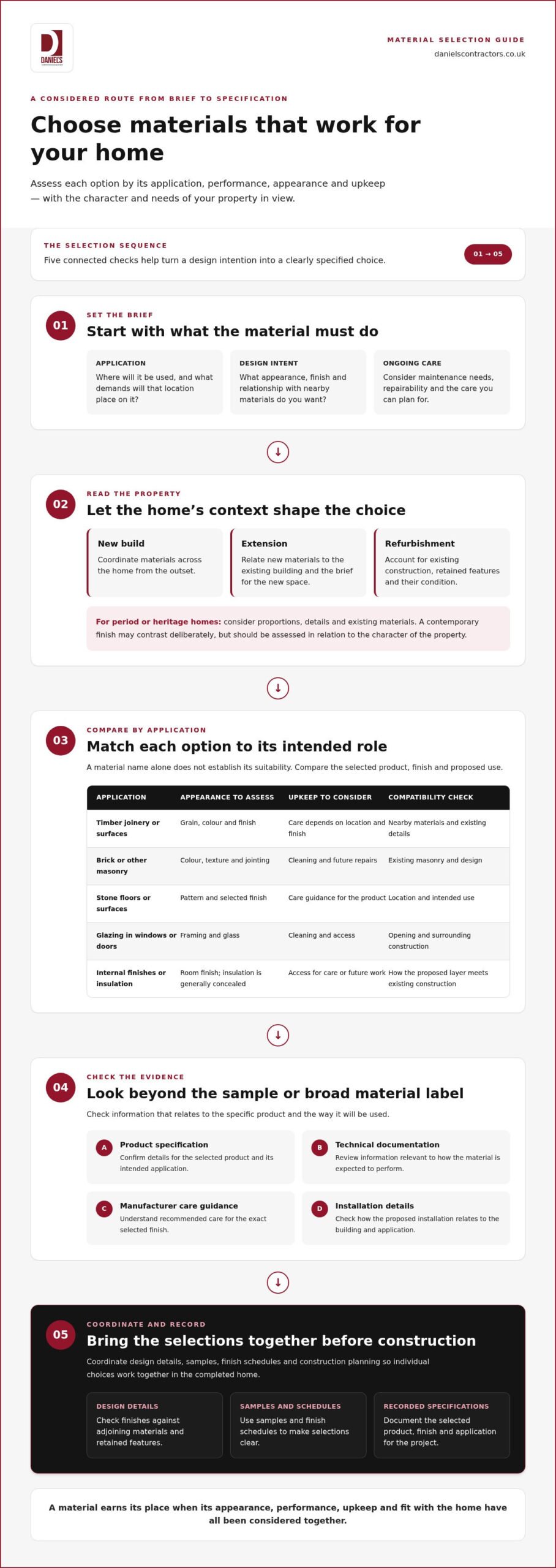
How do you choose materials for a London-area home?
A clear sequence helps you move from broad ideas to choices that can be specified and built with care. The shortlist for a London townhouse may differ from one for a Surrey family home or an Essex new build. Local context matters, but no single set of assumptions applies to every property.
Work through these five steps:
- Define the brief. Set out how you want each space to look and function, which features should remain, and what matters most in daily use.
- Assess the context. Record the home’s age, existing materials, architectural character and relevant site conditions. Heritage status and the condition of existing construction need project-specific assessment.
- Compare options. Consider each material for its intended location, finish, maintenance needs and available product information. Keep practical requirements distinct from aesthetic preferences.
- Coordinate choices. Consider how materials meet at junctions and relate to one another, and whether the design and construction details support the chosen finish.
- Document the decisions. Record product selections, locations, finishes and relevant installation details so the design team and construction team can work from the same information.
How should period and heritage context influence your shortlist?
Begin with what is already there: the materials, proportions and details that give the property its character. Then decide how new work should relate to them. A close visual match may be appropriate in one setting, while a carefully considered contrast may suit another. The choice depends on the building and the design, not on a universal rule.
Where a project calls for like-for-like materials, compare the proposed replacement with the original in appearance and intended use. Reusing or matching a material isn’t automatically the best solution; condition, compatibility and the scope of work all matter. If you’re planning changes to a period property, this guide to Victorian house refurbishment in London offers relevant context for considering character alongside a considered renovation.
How can you make a project-specific materials shortlist?
How do design and construction decisions affect material choices?
For example, an extension can introduce a new external finish, window style or flooring that needs to relate to the original building. The junction between old and new deserves particular attention: a change in level, edge or surface can affect both the appearance and practical detailing. A guide to bespoke house extensions can help frame the design considerations involved where existing and new materials meet.
What should a clear material specification record?
A useful specification turns a design decision into clear information for the people delivering the work. Record the selected material, its intended location, finish and relevant installation detail. Note which sample has been approved, and describe any agreed alternative so a substitution doesn’t quietly change the intended appearance or requirements.
How does workmanship influence the finished result?
Coordination between architects, specialist structural engineers and construction trades helps connect design intent with structural details and the practical order of work. Daniels Contractors uses in-house trades and coordinates with RIBA architects and specialist structural engineers, with project management that supports clear communication between design and construction. The approach is tailored to each project, including its scope and site conditions.
For a home extension, bring material discussions into the design and build process early, so choices can be considered alongside the details of the existing property. Learn about Daniels Contractors’ house extension projects.
How Daniels Contractors brings premium material choices into a home project
Daniels Contractors approaches materials as part of a wider home project, not as a product catalogue. Your priorities shape the design discussions, while the property and the intended use of each space inform how choices are considered during construction. The firm delivers residential projects across London, Surrey and Essex and has operated in London since 2001.
As the brief develops, material decisions can be considered alongside the project’s scope and recorded so the agreed direction remains clear. This gives your preferences a place in the wider plan, from early design discussions through the work on site and handover.
How does project planning keep material decisions clear?
A clear point of contact helps you follow decisions as the project progresses and understand how they relate to site work. Daniels Contractors uses fixed-price contracts and milestone-based reporting to provide a structured framework for project communication. This helps keep the agreed scope and progress visible as work moves through its stages.
Material choices can evolve as the design develops. Clear records of agreed decisions and changes help maintain a shared understanding of what has been selected and how it fits the brief.
What is the next step for a considered home transformation?
Begin by setting out what matters to you: how you want to use each space, which features you hope to retain and what gives your property its character. These priorities give the project a useful starting point. Daniels Contractors tailors its approach to the home and brief, whether you’re planning a refurbishment, conversion, extension or new build.
With the brief established, the project can move through design, construction and handover with decisions guided by your home’s requirements. Find out how Daniels Contractors can help shape your residential project.
Set a clear direction for your home project
Let your priorities guide the next design conversation. Consider how you want each space to feel and function, which details give the property its character, and where a new material could bring a fresh perspective. This gives the design a personal starting point and helps keep individual selections connected to the home as a whole.
Thoughtful choices don’t need to compete for attention. A considered brief can help each finish contribute to a coherent setting, with premium construction materials for homes selected to support the atmosphere and everyday use you have in mind.
To discuss your plans for a home in London, Surrey or Essex, contact Daniels Contractors about your residential project.
Frequently Asked Questions
What makes a construction material premium for a home?
A premium material suits its intended role and can be specified and finished to the standard your project needs. Price or prestige alone doesn’t establish quality. For example, assess a surface chosen for a busy entrance for its intended use, finish and care requirements, as well as its appearance. When comparing premium construction materials for homes, look for relevant product information and consider how the material will be installed.
Are reclaimed materials suitable for London period homes?
They can be suitable, but the decision depends on their condition, intended use, compatibility with the existing building and the property’s context. Reclaimed bricks, for instance, may vary in colour, dimensions or surface wear, so assess their condition and consistency before specifying them for a particular area. Previous use doesn’t automatically make them a better choice. Consider how they’ll meet adjoining materials and whether they support the design intent.
Can modern materials be used in a heritage home?
How can I compare the environmental impact of building materials?
Do premium materials always require less maintenance?
How should materials for a home extension match the existing house?
What information should a home renovation materials schedule include?
Include a clear description of each material, its location and selected finish, with a reference to the relevant sample where one has been approved. Record product details and any agreed alternatives so the selection can be identified during the work. It’s also useful to note when a decision was made and update the schedule if it changes. This creates a shared reference for reviewing selections and resolving queries on site.