
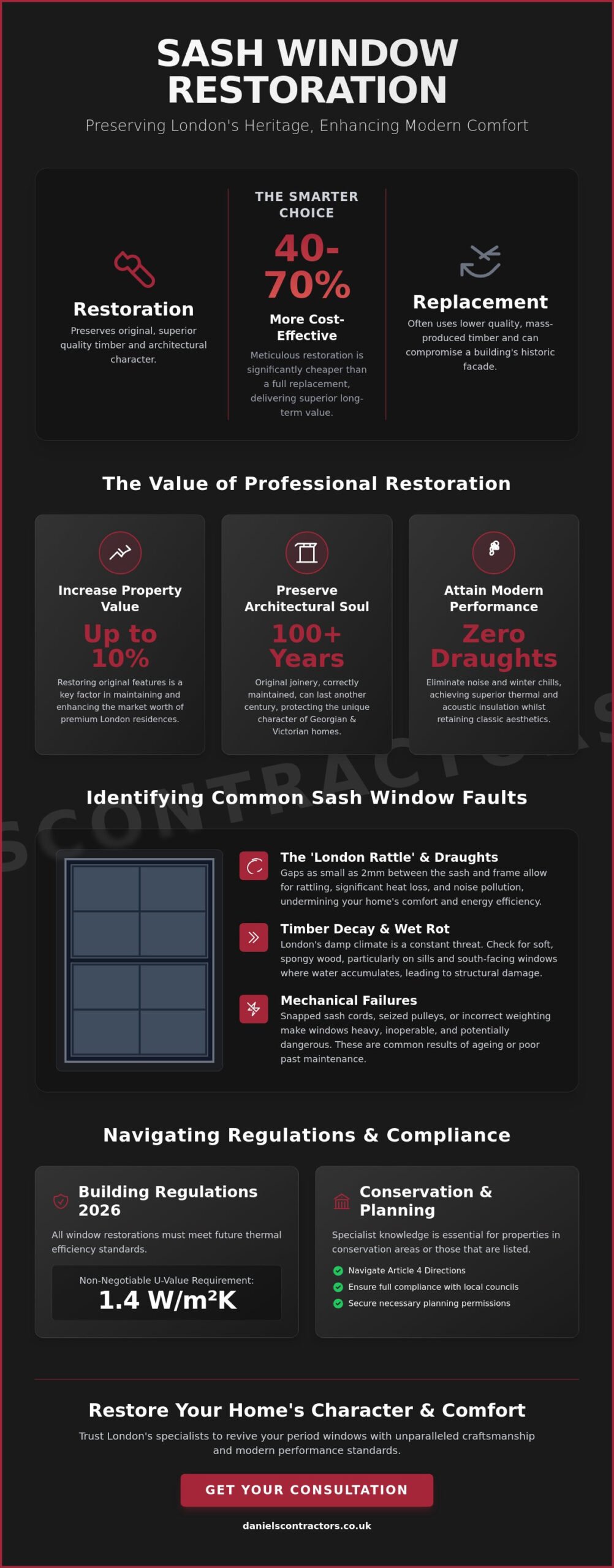
Did you know that meticulously restoring your original timber frames is often 40% to 70% cheaper than a full replacement? Many homeowners across the capital assume that rattling, draughty windows are a lost cause; however, professional sash window repair London services can often revive even the most neglected heritage joinery. You shouldn’t have to choose between the historic soul of your property and the comfort of a warm, quiet home. It’s entirely possible to eliminate street noise and biting winter chills whilst preserving the delicate aesthetic of a Victorian or Georgian facade.
This guide explores how to achieve modern thermal performance and effortless operation whilst remaining fully compliant with strict local conservation rules. We’ll walk you through the essential 2026 building regulations, including the non-negotiable 1.4 W/m²K U-value requirement, and explain the nuances of planning permission for listed buildings. You’ll discover how bespoke restoration techniques can increase your property’s value by up to 10%, ensuring your home remains both a beautiful piece of history and a sanctuary of modern efficiency.
Key Takeaways
- Learn why original timber frames are structurally superior to modern alternatives and how they define the architectural character of Georgian and Victorian London.
- Identify the specific signs of timber decay and the cause of the classic London rattle to address issues before they require a full replacement.
- Discover how professional sash window repair London utilises traditional splicing techniques to preserve historic wood whilst meeting 2026 thermal efficiency standards.
- Navigate the complexities of Article 4 Directions and conservation area requirements to ensure your project remains fully compliant with local council regulations.
- Understand the benefits of synchronising window restoration with larger home refurbishment or extension projects to achieve a cohesive and high-quality result.
The Architectural Significance of Sash Windows in London Properties
The box sash window isn’t merely a functional aperture; it’s the defining hallmark of London’s architectural heritage. From the grand terraces of Belgravia to the charming streets of Hampstead, these windows serve as the eyes of a property, reflecting the distinct aesthetics of the Georgian, Victorian, and Edwardian eras. When embarking on a high-end refurbishment, preserving these features is paramount for any discerning homeowner. Original windows contribute significantly to a home’s kerb appeal. For premium residences, they are a vital component in maintaining market value, as restoring original features can increase a property’s worth by as much as 5% to 10%. A well-executed sash window repair london project doesn’t just fix a frame; it restores the very soul of a period building.
A Legacy of Georgian and Victorian Craftsmanship
The design of these windows evolved alongside the city itself, mirroring the technological shifts of the time. Early Georgian examples often featured thick glazing bars and small panes, a necessity of the glass manufacturing limits of the 18th century. As techniques improved, the Victorian era introduced slimmer profiles and larger expanses of glass, often incorporating ornate “horns” to support the weight of heavier panes. Understanding the Architectural Significance of Sash Windows is crucial for any restoration specialist. The exact proportions of the sashes, the depth of the reveal, and the profile of the mouldings are all integral to the building’s aesthetic integrity. Even a slight deviation in these details can disrupt the visual harmony of a historic facade.
Why Original Joinery Outperforms Modern Alternatives
Identifying Common Sash Window Faults in Period Homes
The “London rattle” is a familiar sound in many period homes, yet it signifies a significant failure in a window’s performance. When sashes don’t sit snugly within their boxes, they allow heat to escape and noise to pour in from the street. This isn’t just an annoyance. It directly impacts your home’s thermal efficiency. Identifying these faults early is the first step toward a successful sash window repair london project. Gaps as small as 2mm can lead to significant draughts, making it impossible to maintain a consistent internal temperature regardless of how high the heating is turned.
Diagnosing Timber Decay and Wet Rot
Mechanical Failures: Snapped Cords and Seized Pulleys
A sash window is a beautifully balanced machine. When a cord snaps, the lead weight inside the box drops, rendering the window dangerous or entirely unusable. This often happens because historical maintenance used inferior cotton cords that couldn’t withstand the friction of daily use. If your windows feel exceptionally heavy, the culprit is usually a seized pulley or an incorrectly balanced weight. Over time, paint and dust can clog the pulley’s axle, forcing you to fight against the window’s own mass. Restoring this effortless glide requires a meticulous overhaul of the internal mechanism. For those planning a broader house refurbishment, addressing these mechanical faults ensures your period features function with the precision of a new build.
Beyond mechanical issues, many London homeowners find their windows “painted shut.” This is the result of decades of thick, overlapping layers of paint. It seals the sashes to the beads and prevents any ventilation, turning a beautiful architectural feature into a static wall of glass. Expert sash window repair london involves carefully stripping these layers to reveal the original profiles and restore movement without damaging the delicate timber underneath. It’s a delicate process that requires a steady hand and a deep respect for the original craftsmanship.
The Restoration Process: Marrying Traditional Craftsmanship with Modern Performance
Restoring a period window requires a surgical approach that respects the original structure whilst integrating contemporary technology. A professional sash window repair london project begins with the careful removal of the sashes from their box frames. This allows for a comprehensive assessment of the timber’s condition, moving far beyond a simple coat of paint. We strip back decades of accumulated layers to reveal the intricate mouldings underneath, ensuring that every detail of the original design is preserved. It’s a methodical process that prioritises the integrity of the building’s historic fabric.
Specialist Draught-Proofing and Acoustic Upgrades
One of the most significant benefits of a modern refurbishment is the elimination of the draughts and rattles discussed in previous sections. We achieve this by routing discreet channels into the staff beads and meeting rails to house high-performance brush strips. These seals remain virtually invisible when the window is closed, preserving the classic silhouette whilst creating an airtight barrier. For homes located near busy London transport links, we often recommend acoustic laminate glass. This specialised glazing can reduce external street noise by up to 35dB, transforming a frantic urban environment into a serene living space. Every upgrade is carefully calibrated to ensure the sashes still glide effortlessly within their tracks.
The Art of Discreet Double Glazing
Meeting the 2026 Building Regulations, which mandate a maximum U-value of 1.4 W/m²K, no longer requires bulky, modern frames. We utilise slimline double-glazed units that are specifically engineered for heritage properties. These units are thin enough to fit within the original glazing rebates, allowing us to maintain the slender glazing bars that are so vital to Georgian and Victorian aesthetics. This “Gentleman Builder” approach focuses on invisible upgrades; you gain the thermal efficiency of a new build without losing a millimetre of period character. It’s a sophisticated way to future-proof your home, ensuring your sash window repair london investment delivers both aesthetic beauty and exceptional energy performance.
Navigating Planning Permissions and Conservation Area Regulations
London’s planning landscape is notoriously intricate, particularly within the historic enclaves of Kensington & Chelsea or Hammersmith & Fulham. In these boroughs, many properties are subject to an Article 4 Direction. This is a legal order that removes standard permitted development rights, meaning even minor external changes to your windows require formal planning permission from the local council. When considering sash window repair london, it’s vital to distinguish between a simple repair and a full replacement. Local authorities almost always prefer the sensitive restoration of original timber, as it preserves the street’s historic character whilst maintaining the building’s architectural integrity.
If your property holds Grade 2 listed building status, the requirements become even more stringent. Any work that affects the character or appearance of the building requires Listed Building Consent. This isn’t just a recommendation; it’s a legal necessity. Unauthorised changes to a listed building are a criminal offence. We approach these projects with a “gentleman builder” ethos, ensuring every detail is documented and every technical drawing is precise. Professional project management simplifies this process, acting as a bridge between your vision and the exacting standards of the conservation office.
Working with Conservation Officers
Gaining approval often hinges on the quality of your technical submissions. Conservation officers require detailed joinery sections that demonstrate a “like-for-like” approach to materials and profiles. Every moulding, horn detail, and glazing bar must match the original exactly. We have extensive experience managing these multi-layered requirements, much like the complexities involved in a luxury basement conversion in London, where architectural preservation meets structural innovation. Providing this level of detail at the outset builds trust with the council and significantly increases the likelihood of a swift approval.
Meeting Building Regulations whilst Honouring Heritage
A common challenge in sash window repair london is balancing modern thermal requirements with heritage constraints. As of 2026, replacement windows must generally achieve a maximum U-value of 1.4 W/m²K under Part L of the Building Regulations. However, for listed buildings and some conservation areas, exemptions may apply to prevent the loss of historic fabric. In cases where slimline double glazing is prohibited, we often implement high-performance secondary glazing as a viable alternative. This provides the necessary thermal and acoustic insulation without altering the external appearance of your period sashes. Our design team can guide you through these technical choices to ensure your home is both compliant and comfortable.
- Planning Application Fee: As of April 2026, a standard householder application in England is £548.
- Listed Building Consent: This application remains free of council fees, though it requires more detailed documentation.
- Timeline: Expect a standard planning decision within eight weeks, whilst listed building applications can take between 12 and 18 weeks.
Integrating Sash Window Restoration into a High-End Home Refurbishment
Restored windows are often the final piece of the puzzle in a comprehensive house renovation in London. They bridge the gap between the building’s historic shell and its modernised interior. By managing the windows as part of the primary contract, we ensure that the same high standards of craftsmanship are applied to every square inch of the property. It’s about maintaining a single point of accountability, which provides the peace of mind that your heritage features are being protected throughout the construction journey. For homeowners planning a broader scope of works, our guide to high-end home refurbishment London outlines how to maximise property value through bespoke craftsmanship and rigorous project management.
Coordinating Window Restoration with Structural Renovations
Managing timelines is the most critical element of a luxury refurbishment. We prioritise making the building weather-tight before any delicate interior finishing begins. This means scheduling sash window repair london early enough to allow for structural settling but late enough to avoid the worst of the site dust. During heavy construction phases, such as loft conversions or extensions, we implement rigorous protection protocols for all glass and timber. Whilst external scaffolding is standard, we often prefer internal scaffolding for the final, meticulous adjustments to the sashes. This allows our craftsmen to work in a controlled environment, ensuring that the final fit is precise and the movement is effortless.
Ensuring Longevity through Meticulous Finishing
The durability of your restoration depends heavily on the quality of the final seal. We utilise advanced microporous paints that allow the timber to breathe whilst providing a robust barrier against London’s soot and rain. These coatings are specifically designed to move with the wood, preventing the cracking and peeling that often leads to rot in inferior repairs. A luxury refurbishment is defined by the “hand-finished” touch; we avoid the flat, plastic look of spray-applied finishes in favour of traditional brushwork that honours the grain of the wood. This attention to detail ensures your windows don’t just look beautiful on day one but remain a functional asset for decades. Contact Daniels Contractors to discuss your bespoke London refurbishment project and discover how we marry period elegance with modern technical precision.
Preserving Your Property’s Legacy for the Next Century
Restoring the original sashes of your home is an investment in both architectural integrity and modern comfort. We’ve explored how identifying early signs of decay and opting for meticulous repairs can save a significant portion of the cost of full replacement. By integrating slimline double glazing and specialist draught-proofing, you can meet 2026 thermal standards without sacrificing the delicate profiles that define your home’s character. Successful sash window repair london depends on a deep understanding of local conservation rules and a commitment to using the highest quality materials.
At Daniels Contractors, we’ve been delivering bespoke London renovations since 2001. Our team specialises in the complex requirements of Grade 2 listed buildings, providing comprehensive project management from the initial design phase to final completion. We understand the nuances of period properties and the importance of a seamless, high-end finish. Discuss your heritage restoration with our expert team today to ensure your windows glide effortlessly for another generation. Your home deserves the care of a master craftsman who values history as much as you do.
Frequently Asked Questions
Is it better to repair or replace my original London sash windows?
Repairing original windows is almost always the preferred choice for heritage properties because it preserves the historic soul of the building and utilises superior old-growth timber. Choosing sash window repair london is also more cost-effective, typically costing significantly less than a full replacement. We only recommend replacement when the structural integrity of the frame has completely failed beyond the point of safe restoration.
Do I need planning permission for sash window repair in a conservation area?
You often require planning permission if your property is in a conservation area, particularly if it’s subject to an Article 4 Direction. Whilst like-for-like repairs usually don’t need formal consent, any change to the glazing or materials often does. It’s essential to check with your local London borough council before starting work to avoid legal complications or enforcement notices later.
Can original sash windows be double glazed without losing their character?
Original sashes can absolutely be double glazed using modern slim-profile units designed specifically for period joinery. These units are thin enough to fit within the original timber rebates, allowing you to achieve a 1.4 W/m²K U-value without altering the window’s slender silhouette. This technique provides a discreet thermal upgrade that satisfies both modern energy requirements and strict conservation standards for historic facades.
How long does a typical sash window restoration take for a London terrace?
A typical restoration for a standard London terrace with four to six windows usually takes between one and two weeks to complete. This timeline includes the removal of sashes, timber repairs, draught-proofing, and final hand-finishing. We manage the project meticulously to ensure the building remains secure and weather-tight at the end of each working day, minimising disruption to your daily routine.
How much does it cost to repair a sash window in London in 2026?
The cost of sash window repair london varies based on the extent of timber decay and the specific performance upgrades you choose. Simple cord replacements are the most affordable option, whilst a full overhaul with slimline double glazing represents a more significant investment. We recommend a professional survey to assess the condition of your joinery and provide a bespoke quote tailored to your property’s unique requirements.
What is the difference between a box sash and a spring sash window?
A box sash window operates using a traditional system of lead weights and pulleys hidden within a hollow timber “box” frame. In contrast, a spring sash uses modern spiral balances to support the weight of the glass, allowing for a much slimmer frame profile. Most period properties in London feature the classic box sash, which is the system we typically restore to maintain architectural authenticity.
Can sash window repair help reduce noise from London street traffic?
Professional restoration significantly reduces street noise by eliminating the gaps where sound waves enter the home. By installing discreet draught-proofing systems and high-performance acoustic laminate glass, you can reduce external noise levels by as much as 35dB. This transformation is particularly beneficial for properties near busy London transport links, creating a much quieter and more tranquil internal environment.
How do I know if my window timber is rotten or just needs a new coat of paint?
You can identify timber decay by using a small screwdriver to gently probe the wood, particularly around the sill and bottom rail. If the tool sinks easily into the timber, you’re likely dealing with wet rot that requires a professional splice repair. If the wood remains firm and the issue is merely aesthetic, such as flaking or cracking, a thorough strip and repaint will usually suffice.