
A truly luxury kitchen extension isn’t an addition to your home; it’s a fundamental reimagining of how your architecture and lifestyle coexist. When exploring bespoke kitchen extension ideas, you likely recognise that a standard “bolt-on” structure won’t suffice for a period property in London or the home counties. You want a space that feels as though it was always meant to be there, yet the complexities of planning permissions and the anxiety of managing multiple contractors often stall these visions.
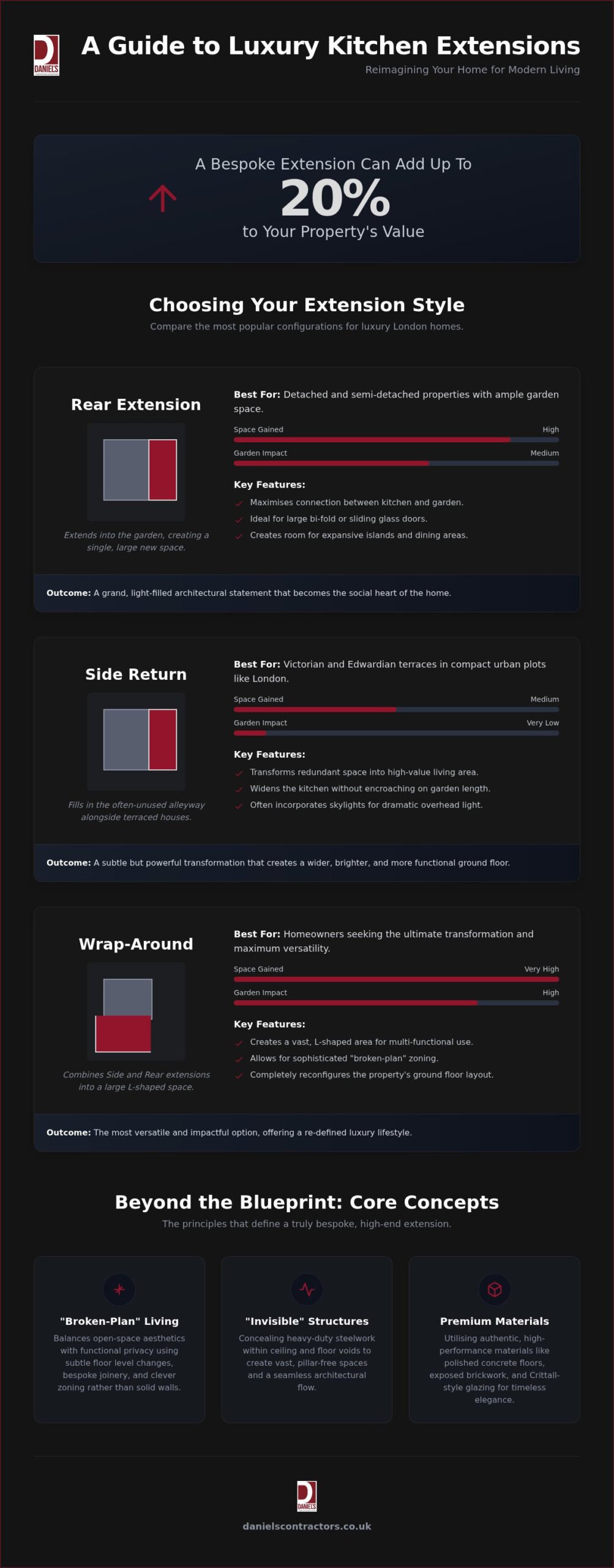
This guide explores how to blend structural innovation with high-end interior craftsmanship, ensuring your new space adds both functional elegance and up to 20% to your property’s value. We’ll examine the shift towards “broken-plan” living, the rise of multi-functional islands, and how to achieve a seamless flow between your bespoke kitchen and the garden. By focusing on a “structural-first” design philosophy, you can create a multi-functional sanctuary that respects the integrity of your home whilst embracing modern luxury.
Key Takeaways
- Identify the ideal configuration for your home by comparing the distinct benefits of rear, side-return, and ambitious wrap-around extensions.
- Discover sophisticated kitchen extension ideas that employ “invisible” structural supports and premium materials to create a truly seamless architectural flow.
- Explore the shift towards “broken-plan” living, using subtle floor level changes and bespoke zoning to balance open-space aesthetics with functional privacy.
- Navigate the complexities of London’s planning landscape by leveraging permitted development rights to simplify the feasibility of your luxury project.
- Ensure a stress-free transformation by prioritising a single point of contact and master craftsmanship to manage every detail of the construction process.
Exploring the Most Popular Kitchen Extension Styles for 2026
The kitchen has transcended its traditional role to become the undisputed heart of the luxury home. In 2026, the trend has shifted decisively towards “living-kitchens.” These are expansive, multi-functional spaces where culinary precision meets social relaxation. When considering home improvement projects of this scale, the choice of extension style is the most critical decision you’ll make. It determines how your home breathes and how you interact with your surroundings every day.
Bespoke kitchen extension ideas are essential for maintaining the structural and aesthetic integrity of London’s diverse architectural heritage. A generic solution rarely respects the proportions of a Victorian terrace or a grand Edwardian villa. By opting for a custom design, you ensure the new addition complements the original building whilst providing the modern volume required for contemporary life. Whether you are looking to create a minimalist sanctuary or a traditional hub, the style must be tailored to your property’s unique DNA.
Rear Extensions: Creating a Grand Architectural Statement
Rear extensions are particularly effective for detached and semi-detached properties found in the leafy suburbs of Surrey and Essex. These projects focus on maximising the physical and visual connection between the kitchen and the garden. By using floor-to-ceiling glazing or slim-profile frames, we flood the interior with natural light, making the space feel vast and airy. This style allows for a significant footprint increase. It provides ample room for grand dining tables and expansive islands that serve as the room’s social anchor, perfect for hosting and family life.
Side Return Extensions: Optimising Narrow London Plots
For homeowners in London’s compact urban centres, the side return extension is a masterclass in space optimisation. It transforms the often-redundant alleyway found alongside Victorian and Edwardian terraces into high-value internal living space. This approach creates a wider, brighter kitchen without encroaching on the length of your garden. It is a subtle yet powerful way to redefine your ground floor. For a more technical breakdown of how to navigate these specific builds, our side return extension guide offers detailed planning advice. For those seeking the ultimate transformation, a wrap-around extension combines both side and rear elements. This creates an L-shaped space that completely reconfigures the property’s relationship with its plot, offering the most versatile floor plan for a modern luxury lifestyle.
Architectural Innovation: Structural Kitchen Extension Ideas
Engineering excellence is the silent partner of luxury design. In 2026, the most sophisticated projects recognised by the Royal Institute of British Architects often feature “invisible” structural supports. By concealing heavy-duty steelwork within the ceiling and floor voids, we create vast, pillar-free spaces that allow for true open-plan living. This meticulous approach transforms standard kitchen extension ideas into architectural masterpieces, where the boundary between the home and the garden appears to vanish entirely.
Glazing and Natural Light: Beyond Standard Bifold Doors
Whilst bifold doors were once the pinnacle of design, 2026 sees a return to the refined lines of Crittall-style glazing. These slim-framed steel doors offer a timeless aesthetic that suits both Victorian renovations and contemporary new builds. To enhance the sense of volume, we often incorporate “glass ribbons”, which are continuous strips of glazing that wrap around the roofline, and oversized skylights. These features don’t just provide light; they define different zones within the room. High-performance thermal glass is essential here, ensuring the space remains energy-efficient and comfortable regardless of the British weather.
Exposed Structural Elements: Industrial Elegance
Rather than hiding the bones of the building, many luxury extensions now celebrate them. These kitchen extension ideas rely on leaving steel RSJs exposed and painting them in deep charcoal or bronze tones to create a striking architectural edge. This honesty in construction often dictates the interior layout, with structural beams used to visually separate the cooking area from the dining zone. Integrating original masonry from the existing house into the new extension further bridges the gap between old and new. Discussing your vision with a specialist in bespoke house extensions ensures these complex technical elements align perfectly with your aesthetic goals.
Roof profiles also play a vital role in the final feel of the project. Vaulted ceilings and exposed rafters can add dramatic height, making a mid-sized extension feel significantly larger. By carefully planning the roof pitch and ceiling heights, we can create a space that feels both intimate and expansive, perfectly suited for the multi-functional demands of modern London life.
Interior Harmony: Zoning and Bespoke Kitchen Layouts
Whilst open-plan layouts remain a staple of modern design, 2026 has seen a definitive shift towards “broken-plan” living. This approach offers a more sophisticated alternative to vast, undivided spaces that can often feel like echo chambers. By using internal glazing, low-level walls, or bespoke joinery, you can create distinct zones for cooking, dining, and relaxing without losing the airy feel of a large extension. These kitchen extension ideas ensure that your home remains functional for multiple activities simultaneously, providing quiet corners for work or relaxation whilst others are busy in the kitchen.
Discretion is the hallmark of luxury in the modern age. Integrating smart home technology, such as invisible speakers, motorised cabinetry, or voice-activated lighting, allows you to enjoy contemporary convenience without compromising the aesthetic integrity of the build. When these elements are planned during the structural phase, they can be hidden entirely within the fabric of the extension.
Smart Zoning for Multi-Functional Living
Effective zoning prioritises the “social hub” around the kitchen island. To manage the acoustic challenges of large, glazed spaces, we often incorporate acoustic timber panelling or strategically placed soft furnishings that absorb sound. This ensures that a lively dinner party in the dining area doesn’t overwhelm someone relaxing in the adjoining living zone. It’s about creating a harmonious environment where every family member can find their own space within a unified architectural footprint.
The Luxury Kitchen Island: A Bespoke Focal Point
The island is often the crown jewel of a high-end extension. In 2026, the trend has moved towards monolithic designs featuring book-matched marble or rare quartzites. These aren’t just work surfaces; they’re sculptural elements that ground the room. By integrating hidden wine climate cabinets and flush-mounted induction hobs with downdraft extractors, the island remains a clean, social space. Its placement is strategic, often perfectly aligned with the extension’s primary glazing to offer garden views whilst you cook or socialise with guests.
Navigating the Practicalities: Planning and Feasibility
The complexity of London’s planning landscape is often the primary hurdle for homeowners. Between strict borough-specific regulations and the delicate nature of period architecture, bringing ambitious kitchen extension ideas to life requires a strategic approach. Navigating these rules isn’t just about ticking boxes; it’s about protecting your investment and ensuring the structural integrity of your home. Working with a partner who intimately understands permitted development rights can significantly streamline this process, often allowing for substantial additions without the need for a full planning application.
In densely populated London boroughs, party wall agreements are a vital component of the feasibility phase. If your build sits on or near a boundary, you’ll need to reach a legal agreement with your neighbours, which typically incurs costs between £700 and £1,500 per affected household. For those seeking maximum volume, the Prior Approval process is a specific planning route that allows for larger rear extensions of up to eight metres for detached houses, provided neighbours are consulted and the local authority approves the impact on the surrounding area. This methodical preparation ensures that when construction begins, every technicality has been addressed.
Permitted Development vs Full Planning Permission
In 2026, many single-storey rear extensions can be achieved under Permitted Development, provided they meet specific depth and height constraints. However, if your property is situated within a Conservation Area or an Area of Outstanding Natural Beauty (AONB), these rights are frequently restricted or removed entirely. Professional project management is essential here to determine the most viable path forward. We handle the intricacies of Lawful Development Certificates, giving you the peace of mind that your luxury addition is fully compliant and legally sound before the first brick is laid.
Structural Engineering for London Period Properties
Extending a Victorian or Edwardian home presents unique structural challenges, as original foundations were rarely designed to support the weight of modern, large-format glazing. We coordinate closely with structural engineers to design bespoke support systems for complex glass roofs and expansive openings. This meticulous engineering ensures your new space is future-proofed for any subsequent high-end home refurbishment. By addressing structural safety and thermal efficiency at the foundation level, we create a space that remains as robust as it is beautiful. If you are ready to explore the architectural potential of your property, speak with our specialist design team today.
Achieving Excellence: The Bespoke Construction Process
Transitioning from ambitious kitchen extension ideas to a finished architectural reality requires more than just skilled labour. It demands a single point of contact who can oversee the entire lifecycle of the project. This unified approach eliminates the friction often found when homeowners are forced to manage multiple independent contractors. At Daniels Contractors, we’ve refined this methodology over 25 years, delivering precision-led developments across the capital since 2001. Our project management is built on absolute transparency, utilising clear milestone tracking to keep you informed and reassured at every stage of the build.
The Daniels Contractors Commitment to Quality
Our firm is founded on the principle of “gentleman building.” This means our teams are polite, professional, and uncompromisingly precise in their conduct. We understand that we’re working within your private sanctuary, not just a construction site. This respectful behaviour, paired with our deep technical expertise, has made us a trusted partner for luxury developments across London, Surrey, and Essex. We take pride in solving complex structural problems with ease, allowing you to enjoy the transformation of your space with complete peace of mind. Enquire about your bespoke kitchen extension today to discuss how we can bring your vision to life with precision and care.
Transform Your Home with Architectural Excellence
Realising your vision for a luxury home requires a balance of architectural ambition and technical precision. The most successful kitchen extension ideas for 2026 prioritise a “structural-first” approach, where frameless glazing and “broken-plan” zoning create a harmonious living environment that respects your property’s heritage. Navigating the complexities of London’s planning rules and period foundations is a task for specialists who value integrity as much as aesthetics.
With 25 years of luxury building experience, Daniels Contractors provides the expert guidance needed to manage these intricate projects. As specialists in London period property extensions, we offer transparent project management from concept to completion, ensuring every detail of your refurbishment meets the highest standards of craftsmanship. We invite you to contact Daniels Contractors to discuss your bespoke kitchen extension and begin the journey of transforming your property. Your home deserves a legacy of quality, and we’re here to build it with you.
Frequently Asked Questions
Do I need planning permission for a kitchen extension in London in 2026?
Most single-storey additions fall under Permitted Development, allowing for 3 to 4 metres of depth without full planning permission. However, homes in London Conservation Areas or listed buildings always require a formal application. As of April 2026, the standard householder application fee is £548. Obtaining a Lawful Development Certificate is a prudent step to ensure your bespoke kitchen extension ideas are legally compliant before you begin the construction phase.
How long does a bespoke kitchen extension typically take to build?
A typical build phase lasts between 12 and 20 weeks, depending on the structural complexity. This timeline covers everything from the initial groundworks to the final bespoke cabinetry installation. You should also allow 3 to 6 months for the design, planning, and party wall stages. Total project duration from the first concept meeting to the final walkthrough often spans 9 to 12 months for high-end London developments.
Can I stay in my house whilst the kitchen extension is being built?
You can certainly remain in residence, though it requires methodical organisation. We typically install temporary kitchen units and robust dust partitions to minimise disruption to your daily life. For more ambitious wrap-around projects involving significant structural changes, some clients choose to vacate for the most intensive month. Our transparent management ensures you’re always informed of upcoming noise or utility shutdowns, allowing you to plan your schedule with complete peace of mind.
How much value does a high-end kitchen extension add to a London property?
A professionally designed extension typically adds between 10% and 20% to a London property’s market value. In 2026, high-quality “living-kitchens” are the most sought-after feature for luxury buyers in Surrey and Essex. This increase often provides a substantial return on investment, particularly when the design integrates structural innovation with premium finishes. Beyond the financial gain, the functional value of a multi-functional space significantly enhances your long-term quality of life and domestic comfort.
What is the difference between a side return and a wrap-around extension?
A side return extension utilises the redundant alleyway space found alongside Victorian terraces to widen the existing room. In contrast, a wrap-around extension combines a side return with a rear addition to create a large, L-shaped footprint. Whilst side returns are ideal for narrow urban plots, wrap-arounds offer the maximum possible volume. They allow for more creative kitchen extension ideas, such as expansive islands and dedicated dining zones that flow into the garden.
How do I choose the right builder for a luxury home extension in Surrey?
Prioritise firms with a proven record in high-end structural work and a “Master Craftsman” approach to finishing. It is essential to choose a partner who offers a single point of contact and transparent project management. Look for specialists with deep experience in London and Surrey heritage properties, such as Daniels Contractors. Verifying their portfolio of luxury developments ensures they have the technical expertise to handle complex glazing and bespoke interior craftsmanship with precision.
What are the current trends for kitchen extension glazing in 2026?
The definitive trends for 2026 include frameless structural glazing and slim-profile Crittall-style doors. These elements are often paired with oversized skylights or “glass ribbons” to maximise natural light and define internal zones. High-performance thermal glass is now standard, ensuring these glazed spaces remain energy-efficient throughout the British winter. These features help create a seamless indoor-outdoor flow, which is a hallmark of modern luxury design in both urban and rural settings.
Is a rear extension better than a basement conversion for adding kitchen space?
A rear extension is usually the superior choice for a kitchen due to the abundance of natural light and direct garden access. Basement conversions are excellent for cinema rooms or wine cellars, but they lack the airy, social atmosphere required for a modern culinary hub. An extension provides the vaulted ceilings and large-scale glazing that define luxury living in 2026. It creates a brighter, more inviting heart for the home that connects with the landscape.