
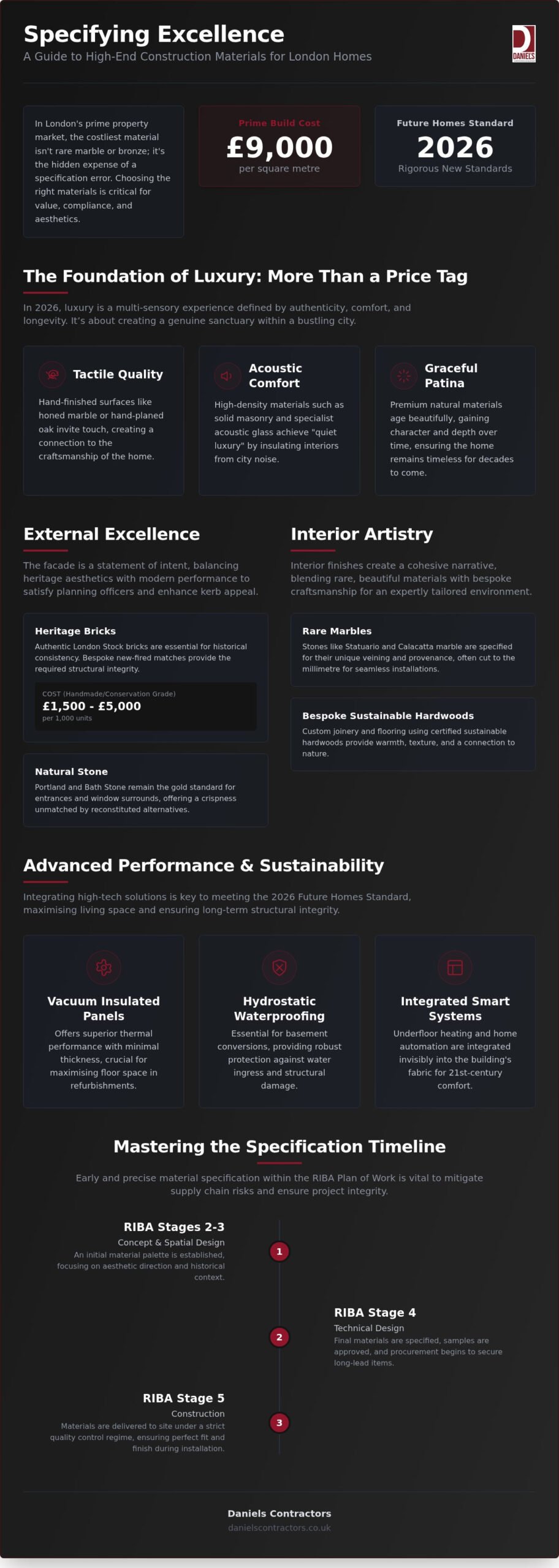
In London’s prime property market, the most expensive material isn’t rare Calacatta marble or hand-forged bronze; it’s the hidden cost of a specification error in a sensitive conservation area. With prime central London build costs now reaching up to £9,000 per square metre, the margin for error has never been slimmer. You likely know that a prestigious home requires more than just a high budget. It demands a sophisticated synergy between heritage authenticity and the rigorous 2026 Future Homes Standard. Finding high-end construction materials for London homes that satisfy both planning officers and your own desire for modern comfort is a complex task.
This guide provides the clarity you need to specify premium materials and bespoke finishes that define the capital’s most exclusive developments. You’ll discover how to source authentic handmade bricks that respect local history whilst integrating the latest thermal technologies. We will preview the essential 2026 material trends, from tactile surfaces to high-spec waterproofing for basement conversions. This approach ensures your project avoids structural failure or aesthetic mismatch. By the end, you’ll have a clear roadmap for creating a home that feels expertly crafted, performs flawlessly, and secures its value for decades to come.
Key Takeaways
- Learn why provenance and tactile quality define luxury in 2026, ensuring your project reflects London’s architectural heritage whilst meeting modern performance standards.
- Discover how to source authentic London Stock bricks and Portland stone to navigate strict conservation area rules and enhance your property’s kerb appeal.
- Understand the nuanced process of specifying high-end construction materials for London homes, from rare Statuario marble to bespoke sustainable hardwoods.
- Explore advanced performance solutions like vacuum insulated panels and hydrostatic waterproofing that maximise living space and structural protection in complex refurbishments.
- Master the timing of material specification within the RIBA Plan of Work to mitigate supply chain volatility and ensure the long-term integrity of your build.
The Foundation of Luxury: Why Material Choice Defines London’s High-End Homes
In 2026, luxury isn’t defined by a price tag alone. It’s found in the provenance of the material and the precision of its fit. Choosing high-end construction materials for London homes involves a tactile experience that mass-produced alternatives simply can’t replicate. This often requires bespoke sizing, where stone slabs or timber planks are cut to the exact millimetre of a room’s proportions. Choosing inferior materials in a prestigious postcode like Belgravia or Mayfair doesn’t just look out of place; it actively diminishes your property’s return on investment. Discerning buyers in the capital expect a level of craftsmanship where every surface tells a coherent story of quality.
London’s architectural history dictates our modern specifications. In boroughs like Kensington or Westminster, the planning process is rigorous and relies heavily on physical material samples. Specifying the correct materials early on can be the difference between a seamless approval and months of costly delays. For instance, the use of Massive precut stone, famously utilised at 15 Clerkenwell Close, has seen a resurgence in contemporary London architecture. This method bridges the gap between traditional masonry and modern efficiency, respecting the weight of history whilst offering superior structural performance and thermal mass.
The Psychology of Premium Materials
Luxury is felt as much as it is seen. Tactile luxury comes from hand-finished surfaces that invite touch, such as honed marble or hand-planed oak. Beyond the surface, acoustic comfort plays a vital role in creating “quiet luxury” within a bustling city. High-density materials, like solid masonry and specialist acoustic glass, block out the hum of the street to create a genuine sanctuary. Unlike synthetic finishes that degrade over time, premium materials age with a graceful patina. They gain character rather than losing their lustre, ensuring the home remains timeless for decades.
Aesthetic Synergy in Refurbishments
A successful high-end home refurbishment London balances Victorian structural integrity with sleek, contemporary internal finishes. It’s about creating a cohesive narrative that flows from a waterproofed basement to a light-filled loft. This synergy ensures the home doesn’t feel like a collection of disjointed rooms but a single, expertly crafted environment. By focusing on materiality, we ensure that modern technology, such as underfloor heating or smart home systems, integrates invisibly into the fabric of a heritage building. This careful blending of eras preserves the building’s soul whilst providing 21st-century comfort.
External Excellence: Sourcing Heritage Bricks and Natural Stone for London Facades
The facade of a London property serves as its primary statement of intent. When selecting high-end construction materials for London homes, the choice of brickwork and masonry is paramount to maintaining both aesthetic integrity and long-term value. Authentic London Stock bricks, known for their distinctive yellow and grey hues, are often the starting point. Whilst reclaimed bricks offer immediate maturity, bespoke new-fired matches provide structural consistency that modern building codes often demand. In 2026, handmade or conservation-grade bricks can range from £1,500 to £5,000 per 1,000 units, reflecting the level of craftsmanship required to mirror historic London streets.
Portland Stone and Bath Stone remain the gold standard for grand entrances and window surrounds. These natural limestones offer a crispness that reconstituted alternatives can’t match. To ensure these traditional elements perform to modern standards, we often specify high-tech sustainable materials and performance coatings that protect the stone from urban pollutants whilst maintaining its natural breathability. This approach satisfies strict conservation area rules whilst enhancing the property’s kerb appeal.
Brickwork and Masonry Matching
Achieving a seamless transition between old and new requires more than just picking the right colour. It’s about the “imperial” sizing of the brick and the specific composition of the mortar. Traditional lime mortars are essential for heritage breathability; they allow moisture to escape and prevent the spalling of historic brickwork. We meticulously match mortar texture and colour to existing 19th-century structures to ensure that bespoke house extensions London look like an organic evolution of the original property rather than a jarring addition. This precision is what separates a standard build from a master-crafted refurbishment.
Architectural Glazing and Metalwork
Modern luxury facades often pair heavy masonry with delicate metalwork and ultra-slim glazing. Crittall-style steel frames remain a favourite for their industrial heritage, now updated with advanced thermal breaks to meet the 2026 Future Homes Standard. For contemporary loft transformations, bespoke leadwork or zinc roofing provides a durable, high-contrast finish that complements traditional slate. Using oversized glass panels requires specific structural considerations to ensure seamless indoor-outdoor transitions without compromising the building’s thermal envelope. If you’re planning a significant exterior transformation, our team can help you refine your material specification to ensure a perfect match for your home’s unique character.
Interior Artistry: Bespoke Joinery, Rare Marbles, and Architectural Finishes
Moving inside, the focus shifts to the intimate details that define a home’s character. When specifying high-end construction materials for London homes, the internal palette must balance aesthetic ambition with functional longevity. Sustainable hardwoods like Oak, Walnut, and Ash provide the structural backbone for bespoke cabinetry. These aren’t just aesthetic choices; they offer a tactile warmth that synthetic alternatives lack. We also see a growing demand for “invisible technology,” where smart home sensors and speakers are embedded behind natural wood or stone veneers to preserve the visual purity of a room.
Under the surface, the choice of floor screed is critical. High-performance, thermally conductive screeds ensure that luxury underfloor heating systems operate at peak efficiency. This technical precision ensures the home remains comfortable whilst minimising energy waste. It’s this marriage of hidden performance and visible beauty that characterises a truly premium refurbishment.
Bespoke Joinery and Cabinetry
London’s unique architectural floorplans often render “off-the-shelf” units useless. Period alcoves and varying ceiling heights require a tailored approach to maximise space. Bespoke joinery allows for millimetre-perfect integration, using techniques like book-matched veneers to create symmetrical wood grains. This level of detail is particularly valuable when calculating the loft conversion cost London. Custom storage can transform awkward eaves into functional, hand-finished dressing rooms that add significant value to the property.
Stone, Tile, and Surface Specification
The resurgence of rare marbles like Calacatta and Statuario has transformed master suites into private galleries. We always recommend visiting the stone yard in person. Every slab of natural stone is unique; seeing the veining firsthand ensures the final installation matches your vision. Whilst natural stone offers unmatched prestige, large-format porcelain is an excellent alternative for high-traffic areas where stain resistance is paramount. For a softer finish, specialist plasters such as Venetian polished plaster or waterproof Tadelakt for wet rooms provide a hand-crafted texture that paint cannot replicate. These finishes age beautifully, developing a subtle depth over time.
Performance and Sustainability: High-Tech Materials for 2026 Refurbishments
Luxury in 2026 is measured by the invisible performance of the building fabric. Whilst aesthetic finishes capture the eye, the true value of high-end construction materials for London homes lies in their ability to meet the 2026 Future Homes Standard whilst maximising every square millimetre of internal space. In narrow London extensions, traditional thick insulation can eat into valuable floor area. Vacuum insulated panels (VIPs) provide a sophisticated solution; they offer ultra-high thermal resistance at a fraction of the thickness of standard boards, allowing for slimmer wall profiles without compromising on warmth.
For heritage properties, particularly Grade II listed buildings where structural alterations are restricted, Aerogel insulation is becoming the gold standard. It allows us to achieve high thermal performance without altering the historic proportions of the structure. In glass-heavy designs, smart glass technology manages solar gain and privacy at the touch of a button. This technology removes the need for bulky blinds that might obscure architectural lines, maintaining a clean and minimalist aesthetic.
Structural Integrity in Complex Builds
London’s geography presents unique challenges, specifically the dense London clay that requires precise engineering. For a luxury basement conversion London, we specify high-strength reinforced concrete and advanced hydrostatic waterproofing systems. These systems are designed to withstand the significant water pressure found in subterranean environments, providing absolute peace of mind. To maintain the “quiet luxury” of a multi-storey home, we integrate silent drainage systems that virtually eliminate acoustic transfer between floors. We also focus on specifying structural steelwork that allows for expansive, open-plan living without the need for visible columns, maintaining a seamless visual flow throughout the ground floor.
The Sustainable Luxury Home
Sustainability is now a core requirement for the premium market, driven by both environmental conscience and the need for energy security. Mechanical Ventilation with Heat Recovery (MVHR) systems are essential for maintaining air quality whilst recycling heat energy that would otherwise be lost. We pair these systems with low-VOC paints and natural oils to ensure a healthy internal environment, free from synthetic off-gassing. For the exterior, the longevity of copper and zinc roofing makes them a superior choice for sustainable luxury. These materials last for generations and develop a protective patina over time, aligning with the 2026 shift towards high-performance, circular construction.
If you are ready to integrate these advanced technologies into your next project, contact Daniels Contractors to discuss your bespoke specification.
Navigating the Supply Chain: How Daniels Contractors Ensures Material Integrity
Quality control is a continuous process that begins at the source. We don’t just order materials; we verify their provenance and ensure they meet our rigorous standards for both aesthetics and performance. By acting as a reliable partner to both the client and the design team, we ensure that the material intent is never lost in translation. This dedication to integrity ensures that every component, from the structural steel to the final coat of specialist plaster, contributes to a home of exceptional quality.
Procurement and Project Management
Managing lead times is a critical component of high-end project management. Specialist architectural glazing or custom-cut marble often requires 12 to 18 weeks for delivery. By finalising these choices during the design phase, we ensure that the build schedule remains on track. Our approach to victorian house refurbishment london involves a transparent procurement process. We provide fixed-price clarity for premium materials, ensuring that the luxury label doesn’t lead to unpredictable cost creep. This methodical planning provides our clients with the peace of mind that their investment is being managed with professional precision.
Execution and Craftsmanship
Ready to specify your dream project? Contact Daniels Contractors today to discuss how we can bring your vision to life with precision and care.
Building Your London Legacy with Precision
Creating a prestigious residence in the capital requires more than just an aesthetic eye. It’s about the deliberate selection of materials that respect the past whilst embracing the technological demands of 2026. You’ve seen how the right choice of heritage brickwork or a rare marble slab can elevate a property’s value, and how advanced insulation preserves internal space in narrow extensions. Specifying high-end construction materials for London homes is a meticulous process that demands both technical foresight and a passion for the craft. Without a steady hand at the helm of procurement and installation, even the finest materials can lose their impact.
With 25 years of quality building experience, Daniels Contractors provides the expert guidance needed to navigate this complex landscape. We specialise in London heritage and luxury builds, offering comprehensive project management from initial design to the final, hand-finished detail. Our master craftsmen ensure that your chosen materials are installed with the precision they deserve, protecting your investment for decades to come. Discuss your high-end London project with our expert team today. We look forward to helping you transform your vision into a home of lasting distinction and comfort.
Frequently Asked Questions
What are the most durable external materials for a London house extension?
Natural stone, such as Portland or Bath stone, and high-quality facing bricks are the most durable choices for the capital’s environment. These materials withstand urban pollutants whilst developing a graceful patina over time. For roofing, zinc and copper offer exceptional longevity, often lasting over 100 years. These selections ensure your extension remains structurally sound and aesthetically pleasing, protecting the property’s premium status for future generations.
Can I use modern high-performance insulation in a Grade II listed building?
Yes, advanced materials like Aerogel or vacuum insulated panels (VIPs) allow you to upgrade thermal performance without compromising historic fabric. These high-tech solutions provide superior insulation in extremely thin profiles, which is essential when preserving original room proportions or delicate cornicing. We work closely with conservation officers to ensure these specifications meet both heritage requirements and the 2026 Future Homes Standard whilst maintaining the building’s integrity.
How do I ensure my new brickwork matches the existing Victorian London Stock?
Achieving a seamless match requires sourcing either genuine reclaimed bricks or bespoke new-fired matches that replicate the specific yellow and grey tones of the original. We always use “imperial” sized bricks rather than modern metric versions to maintain correct architectural proportions. Using a traditional lime mortar is also critical; it allows the heritage building to breathe and prevents the spalling often caused by modern cement-based mortars.
Are bespoke materials like Carrara marble worth the investment for a refurbishment?
Bespoke materials like Carrara or Statuario marble significantly enhance the uniqueness and resale value of a prime property. These natural stones provide a tactile luxury that mass-produced tiles cannot replicate. When selecting high-end construction materials for London homes, investing in authentic stone ensures that your master suite or kitchen serves as a timeless focal point that appeals to the most discerning future buyers in the London market.
What is the best waterproofing material for a luxury basement conversion?
A dual-layer approach using a Type C cavity drainage system combined with high-spec hydrostatic waterproofing is the most reliable method. This combination manages water pressure from the surrounding London clay whilst providing a completely dry internal environment. We specify reinforced concrete for the structural shell to ensure maximum integrity. This methodical approach gives homeowners peace of mind that their subterranean living space is fully protected against damp and flooding.
How do high-end materials impact the overall cost of a house renovation?
While premium materials increase the initial capital outlay, they lower long-term maintenance costs and significantly boost property ROI. In prime central London, build costs for high-specification projects can range from £5,800 to £9,000 per square metre. Investing in superior materials ensures the property reflects the prestige of its location. This prevents the value-diminishing effect that standard finishes can have on luxury homes in Westminster, Kensington, or Belgravia.
Why is bespoke joinery preferred over high-end off-the-shelf options?
Bespoke joinery is essential for the non-uniform floorplans typical of London’s period properties. It allows for millimetre-perfect integration in awkward alcoves and eaves, maximising every inch of available space. Unlike off-the-shelf options, custom cabinetry uses book-matched veneers and hand-painted finishes to create a cohesive aesthetic narrative. This level of craftsmanship ensures your home feels unique and is expertly tailored to your specific lifestyle and storage needs without compromising on quality.
What role do sustainable materials play in luxury construction in 2026?
Sustainable materials are now a fundamental requirement for the premium market, driven by the 2026 Future Homes Standard. We specify biogenic materials and high-performance systems like MVHR to create healthier internal environments. High-end construction materials for London homes now include low-carbon heating and circular materials like zinc. These choices align environmental responsibility with the desire for long-term durability and lower energy consumption in the capital’s most prestigious residential developments.