
The true value of a London Victorian restoration isn’t found in the square footage, but in the secrets hidden behind the lath and plaster. It’s a common misconception that a high-end finish is the primary expense, when in reality, the most significant victorian house renovation cost london drivers are often the invisible structural upgrades required to preserve these heritage assets for another century. You likely appreciate the timeless elegance of a period property, yet the prospect of structural surprises and the labyrinth of conservation area planning can feel overwhelming.
We understand that transparency is the foundation of any successful partnership. This guide provides a definitive roadmap for your 2026 luxury budget, offering clarity on everything from the latest Part L building regulations to the intricacies of bespoke sash window restoration. You’ll gain a clear understanding of investment tiers and the technical milestones involved in a premium refurbishment. By the end of this article, you’ll have the confidence to manage the complexities of heritage construction and the insight needed to select a contractor who treats your vision with the meticulous care it deserves.
Key Takeaways
- Identify the primary victorian house renovation cost london by distinguishing between visible aesthetic finishes and essential “invisible” structural reinforcements.
- Understand the investment tiers of Victorian refurbishment to ensure your budget aligns with the technical requirements of high-end London property standards.
- Evaluate the long-term value of expert sash window repair and bespoke period joinery in maintaining the heritage character and kerb appeal of your home.
- Navigate the complexities of planning permission and professional fees, particularly when working within conservation areas or on listed buildings.
- Discover how strategic layout optimisations and bespoke extensions can transform traditional Victorian floorplans into functional spaces for modern living.
Understanding the Tiers of Victorian Renovation Costs in London
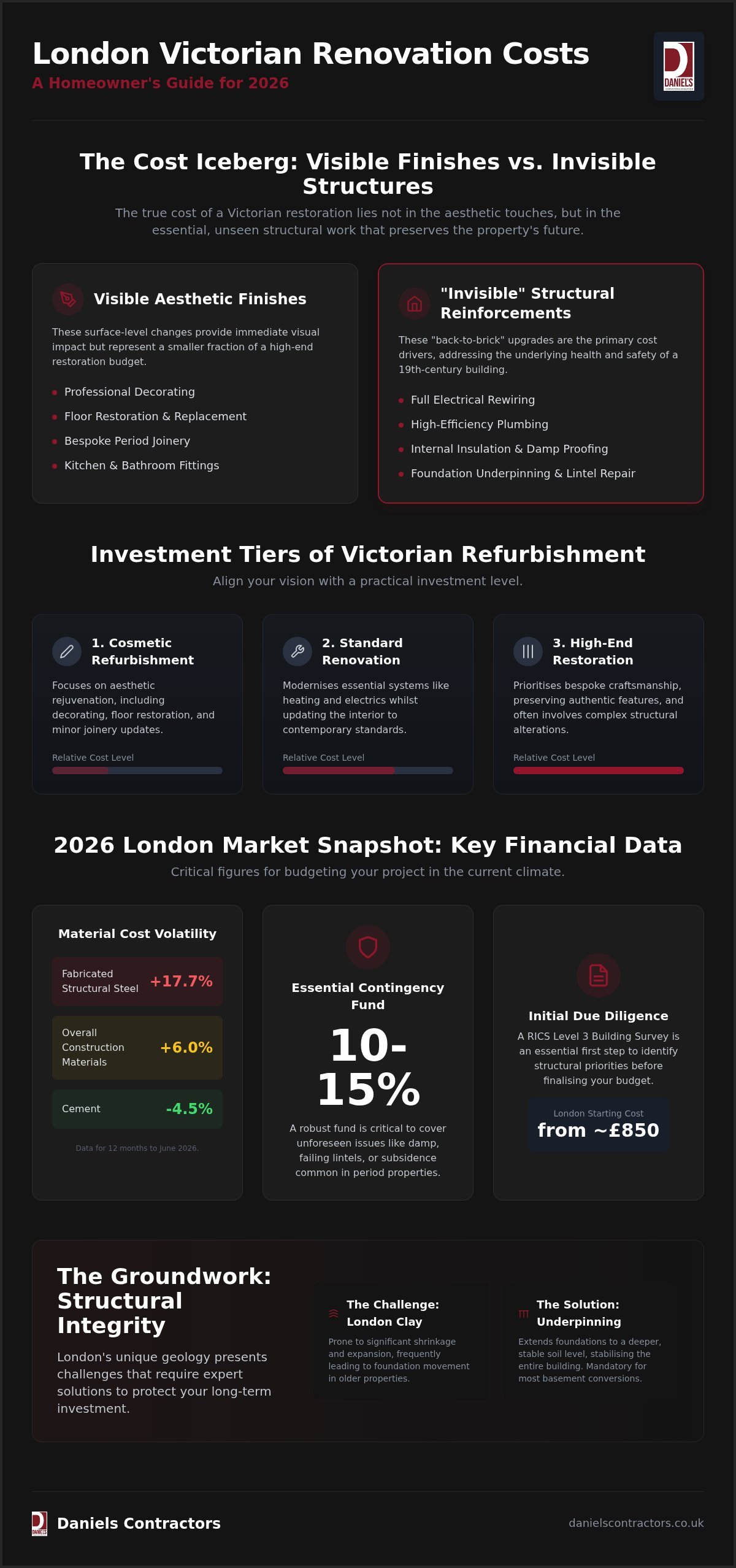
Determining a realistic victorian house renovation cost london requires more than a simple square-metre calculation. It demands an appreciation for the specific era of the property and the level of finish you intend to achieve. We categorise these projects into three distinct tiers to help you align your vision with practical investment levels:
- Cosmetic Refurbishment: This focuses on aesthetic rejuvenation, including professional decorating, floor restoration, and minor joinery updates.
- Standard Renovation: This tier modernises essential systems like heating and electrics whilst updating the interior to contemporary standards.
- High-end Restoration: This level prioritises bespoke craftsmanship and the preservation of authentic Victorian architectural styles, often involving complex structural alterations and premium materials.
Cosmetic Refresh vs. Full Structural Refurbishment
A cosmetic refresh is often deceptive in its simplicity. It typically involves surface-level changes such as painting, installing new flooring, and basic joinery. Whilst these updates offer immediate visual impact, they don’t address the underlying health of a 19th-century building. In contrast, a full structural refurbishment is a comprehensive “back-to-brick” undertaking. This process involves stripping the property to its skeleton to install modern rewiring, high-efficiency plumbing, and internal insulation. Structural changes, such as removing load-bearing walls to create “broken-plan” living, impact the overall budget far more significantly than your choice of aesthetic finishes.
The 2026 London Market: Labour and Material Trends
The 2026 landscape presents unique challenges for London homeowners. Verified data indicates that the overall price index for construction materials rose by 6.0% in the 12 months to June 2026. Specific materials have seen even more volatility; for example, the price of fabricated structural steel increased by 17.7% in the same period, whereas cement prices fell by 4.5%. These fluctuations mean that the specific design of your renovation can heavily influence the final victorian house renovation cost london.
The demand for master craftsmen who understand heritage techniques remains at an all-time high in the capital. The London Premium is the intersection of complex site access logistics and the necessity for highly skilled, specialised labour. Because these projects require precision and a deep understanding of period buildings, the value of a main contractor who can manage these specialised trades is paramount.
Given the age of these buildings, we always advise clients to maintain a robust contingency fund of at least 10% to 15%. Nineteenth-century structures frequently hide issues like failing lintels, damp, or subsistence that only become apparent once work begins. A transparent approach to these potential surprises ensures your project remains a rewarding transformation rather than a source of anxiety.
Structural Integrity: The Invisible Costs of Period Properties
Many homeowners focus on the heritage cornicing or the bespoke kitchen, yet the most critical victorian house renovation cost london drivers often lie beneath the floorboards. Victorian properties were built to different standards than today’s homes. After a century of movement, issues like subsidence or failing masonry lintels are common. Addressing these structural defects proactively prevents costly remedial work later in the project. We always recommend a RICS Level 3 Building Survey as an essential first step. Verified 2026 data shows these surveys in London start from approximately £850, providing a definitive list of structural priorities before you finalise your budget.
London Clay and Foundation Underpinning
London’s geology presents a unique challenge for period restorations. The high volume of London clay is prone to significant shrinkage and expansion, which frequently leads to foundation movement in older terraces. If you’re planning a luxury basement conversion London, underpinning or piling becomes a mandatory part of the structural phase. This process involves extending the foundations to a deeper, more stable soil level. Beyond adding valuable living space, this stabilises the entire building and protects the long-term integrity of your refurbishment. For those in historically significant homes, securing Listed Building Consent is a prerequisite before any such structural interventions can begin. If you are unsure where to start, our team can help you prioritise these structural essentials to ensure a sound foundation for your design.
Moisture management is another essential but often hidden cost. Victorian houses were designed to breathe, but modern living habits often trap humidity. Installing a chemical damp-proof course or a cavity drain membrane is vital for protecting high-end finishes from rising damp. This is particularly important for ground floor and subterranean spaces where moisture ingress can ruin bespoke joinery and plasterwork; similarly, ensuring your roof drainage is handled by a specialist like Roof Plumbing Expert protects the building’s upper structure from the elements.
Modernising Victorian Systems: Rewiring and Replumbing
Replacing antiquated “patchwork” plumbing with a modern unvented water system ensures high-pressure showers on every floor. It’s a false economy to leave old lead pipes or rubber-coated wiring in place during a high-specification project. A full rewire allows for the seamless integration of smart home technology, such as automated lighting and climate control, without disturbing your restored plasterwork at a later date. These systems provide the daily convenience of a new build whilst maintaining the soul and character of a period home. Investing in these core systems early in the programme provides the peace of mind that your home is as functional as it is beautiful.
Bespoke Restoration vs. Modern Replacement
Choosing between restoration and replacement is a pivotal decision that shapes the final victorian house renovation cost london. While modern replacements might seem cost-effective initially, they often detract from the property’s historical integrity and long-term resale value. High-end buyers in London prioritise authenticity, and restoring original features is a direct investment in the building’s prestige. Using a guide for identifying key architectural details helps homeowners pinpoint which elements deserve the meticulous effort of a specialist craftsman. Authentic restoration is as much about protecting your capital as it is about aesthetics.
The Art of Sash Window Restoration
Sash windows are the defining feature of a Victorian facade. Replacing original timber frames with uPVC is a common mistake; it compromises the aesthetic and is frequently rejected by planning officers in London’s many conservation areas. Professional sash window repair preserves the character whilst integrating modern performance. We incorporate high-performance draught-proofing and acoustic glazing to ensure your home remains a quiet sanctuary amidst the city’s noise. This approach enhances kerb appeal and ensures the property retains its heritage value. It is a sophisticated way to achieve modern comfort without sacrificing the soul of the building.
Bespoke Joinery and Period Plasterwork
The restoration of ceiling roses and decorative mouldings acts as a luxury differentiator. These intricate details are often lost under layers of paint or damaged by previous unsympathetic work. Replicating them requires specialist trades who understand traditional lath and plaster techniques. A truly exceptional Victorian house refurbishment london depends on these master craftsman details. By prioritising these authentic touches, you create a home that feels both historically significant and elegantly modern. This delicate balance is what drives the highest return on investment in the London luxury market.
Navigating Planning Permission and Hidden Fees
Living in one of London’s many conservation areas adds significant prestige to a property, but it also introduces layers of financial and administrative complexity. Planning officers in these “protected” neighbourhoods often mandate the use of specific, high-specification materials to maintain the street’s historical character. Requirements for reclaimed London stock bricks or natural Welsh slate can inflate your material budget compared to standard alternatives. It’s vital to consult a specialist guide on understanding permitted development rights to determine which alterations require full planning consent. As of April 2026, the statutory fee for a householder planning application in England is £548, and budgeting for further increases is a prudent step for any 2026 project.
The Hidden Cost of Party Wall Agreements
In the dense residential streets of the capital, your project will almost certainly involve shared boundaries. The Party Wall etc. Act 1996 requires you to serve formal notice to your neighbours for any structural work affecting a party wall or excavations near their foundations. If a neighbour dissents, you’re legally responsible for the fees of their appointed surveyor as well as your own. In a typical London terrace, you may require at least two Party Wall awards. You must budget for these legalities at the earliest planning stage to prevent costly work-stoppage injunctions and maintain positive relationships with your neighbours.
Building Control compliance is the final pillar of a successful refurbishment. These fees cover the inspections and certificates required to prove your home meets modern safety and energy standards. With the 2026 updates to Part L of the Building Regulations, achieving the mandated energy efficiency in a 19th-century structure requires technical expertise and careful material selection. If you’re feeling overwhelmed by these regulatory requirements, contact our specialist team to discuss how we can manage every aspect of your planning and compliance journey.
Maximising Value: Extensions and Layout Optimisation
Adding a bespoke house extension London shifts the financial narrative of your project from preservation to significant value creation. While structural repairs protect your capital, an extension actively increases the property’s market ceiling. The most successful projects harmonise original Victorian proportions with contemporary, light-filled spaces. This strategic expansion fundamentally alters the victorian house renovation cost london by front-loading structural investments, such as the 17.7% increase in fabricated steel costs seen in early 2026, to achieve a more efficient cost-per-square-metre over the entire project.
Side-Return and Rear Extensions
Side-return extensions are the quintessential London solution for Victorian terraces. By reclaiming the narrow outdoor passage, you can transform a cramped galley kitchen into a generous “broken-plan” living area. This process involves significant structural complexity, specifically the removal of the original rear and side load-bearing walls. High-end glazing and bi-fold doors are major cost drivers here, but they provide the essential connection to the garden that modern luxury buyers demand. Effective layout optimisation often makes a property feel considerably larger without requiring a massive increase in the physical footprint. When planning these structural changes, many homeowners also choose to future-proof their homes; you can find out more about integrating accessibility and ageing-in-place modifications into your new layout.
Managing a multi-faceted luxury project by coordinating individual trades is often a recipe for compounding delays and budget creep. At Daniels Contractors, we believe in a transparent approach that provides certainty in an evolving market. Our role as a master craftsman and reliable partner is to navigate the technical hurdles of heritage construction whilst you focus on the vision for your home. Professional project management prevents the costly mid-project delays that occur when disparate trades aren’t properly synchronised.
Since 2001, we have specialised in delivering these complex transformations across London, Surrey, and Essex. We invite you to explore our portfolio of high-end home refurbishment London projects to see how we balance precision engineering with period elegance. Choosing an experienced main contractor isn’t just about build quality; it’s about the peace of mind that comes from knowing every detail is handled with integrity and care.
Realising Your Vision for a Restored Victorian Masterpiece
A successful refurbishment balances historical elegance with modern structural performance. You now understand that the true victorian house renovation cost london is a reflection of both visible craftsmanship and the essential structural reinforcements that secure your home’s future. By prioritising heritage-correct restoration over generic replacements, you protect the soul of the building whilst ensuring a significant return on investment.
Navigating the complexities of London’s planning landscape and the 2026 building regulations requires a partner who values transparency as much as precision. With over 25 years of luxury building experience, we specialise in the unique demands of London period properties. Our approach centres on transparent fixed-price project management, giving you peace of mind from the initial design phase to the final bespoke finish.
Request a bespoke renovation consultation with Daniels Contractors to begin your transformation. Your Victorian home has stood for over a century; we’re here to ensure it remains a stunning London landmark for the next hundred years.
Frequently Asked Questions
How much does it cost to renovate a 3-bedroom Victorian house in London?
A full renovation of a typical 100 m² 3-bedroom Victorian terrace in London generally ranges from £280,000 to £450,000 for mid-range specifications. For high-end restorations featuring bespoke finishes, costs often reach between £4,000 and £6,000 per square metre. These figures include VAT and structural works but exclude professional fees. Your final victorian house renovation cost london depends on the complexity of the structural updates and the level of craftsmanship required for period features.
Do I need planning permission to renovate my Victorian terrace?
Internal refurbishments often fall under Permitted Development rights, though external changes or extensions usually require formal planning permission. If your property is Grade II listed or situated within a London Conservation Area, you must obtain Listed Building Consent for almost any alteration. Navigating these regulations is essential to avoid legal complications. We recommend checking with your local authority or an architect early in the design phase to confirm specific requirements for your borough.
How long does a full Victorian house refurbishment typically take?
A comprehensive Victorian refurbishment typically takes between six and nine months, depending on the scope of structural work. Projects involving complex basement conversions or multi-storey extensions can extend to twelve months or more. This timeline accounts for the meticulous restoration of heritage details and the installation of modern systems. We prioritise methodical project management to ensure every phase is completed to a high standard whilst minimising potential delays in the construction programme.
What are the most common hidden costs in Victorian renovations?
Structural surprises like failing masonry lintels, subsidence in London clay, and rising damp are the most frequent hidden costs. You might also encounter antiquated lead piping or rubber-coated wiring that necessitates a full system replacement. It’s prudent to maintain a contingency fund of 10% to 15% to address these issues. A RICS Level 3 survey is an invaluable tool for identifying these invisible costs before you commit to a final budget.
Is it cheaper to replace or restore Victorian sash windows?
Professional restoration is often more cost-effective than installing high-quality, heritage-approved timber replacements. Whilst uPVC alternatives might appear cheaper, they are frequently prohibited in London’s conservation areas and can significantly devalue a period property. Expert repair preserves the original timber frames whilst integrating modern draught-proofing and acoustic glazing. This approach maintains the building’s kerb appeal and ensures your home remains energy efficient without sacrificing its authentic Victorian character.
How does a Party Wall Agreement affect my renovation budget?
Party Wall Agreements introduce legal and surveyor fees that can increase your budget by several thousand pounds. If your neighbours dissent to the works, you are responsible for paying the fees of their appointed surveyors in addition to your own. In dense London streets, you may need multiple awards for a single project. Budgeting for these legalities early prevents work-stoppage injunctions and ensures the structural phase of your renovation proceeds without unnecessary friction.
Can I live in the house whilst the renovation is being carried out?
Living on-site during a full back-to-brick refurbishment is generally not recommended due to the significant dust, noise, and lack of essential services. Structural works and system upgrades often require the water and electricity to be disconnected for extended periods. For high-end projects, vacating the property allows the construction team to work more efficiently and protects your wellbeing. It also ensures that premium finishes and bespoke joinery are installed in a controlled, clean environment.
How much value does a high-end renovation add to a London property?
A high-specification renovation in prime London areas can increase a property’s value by 10% to 20% or more. Adding square footage through loft conversions or extensions typically offers the highest return on investment. Quality craftsmanship and restored period features act as luxury differentiators that attract premium buyers. By focusing on both structural integrity and aesthetic excellence, you ensure your victorian house renovation cost london is a sound investment that yields significant long-term capital growth.