
What if your original timber windows could provide the thermal comfort of a modern new-build without sacrificing a single millimetre of their historic profile? It’s a common frustration for London homeowners who seek heritage sash window repair London because they cherish their property’s soul but dread the draughty, rattling panes and rising energy bills. You’ve likely worried that a standard refurbishment is merely a temporary mask for underlying rot or that the complexities of Grade II listing might stall your project indefinitely.
We understand that your home is both a sanctuary and a significant investment. This master guide demonstrates how bespoke restoration, paired with 2026 thermal innovations like vacuum-sealed glazing, can transform your living space. You’ll learn how to navigate conservation officers with confidence and ensure your windows perform at a premium level for decades. We’ll walk through the technical precision required to handle London’s shifting clay and structural challenges, providing a clear roadmap for a seamless, expertly managed restoration.
Key Takeaways
- Understand why it’s essential to preserve original timber features to maintain “prime” property valuations in the competitive London market.
- Discover how master craftsmen resolve alignment issues and timber rot caused by the unique challenges of London Clay foundations.
- Learn about 2026 vacuum-insulated glazing and acoustic laminates that deliver modern warmth and silence whilst honouring historic aesthetics.
- Gain a clear roadmap for the planning permissions and legal requirements associated with heritage sash window repair London in sensitive conservation areas.
- See how bespoke window restoration fits into a wider refurbishment strategy to create a seamless and high-performance home environment.
The Strategic Value of Heritage Sash Window Restoration in London
Choosing heritage sash window repair London is a strategic investment in a property’s long-term viability and character. It isn’t merely a cosmetic fix; it’s a meticulous engineering process that restores original timber whilst integrating high-performance upgrades. To understand the enduring value of these features, one must look at the history of sash windows, which have defined the capital’s architectural identity for centuries. In the 2026 London property market, authenticity remains a primary driver for “prime” valuations. Buyers in prestigious postcodes increasingly seek homes that retain their historic soul without the traditional drawbacks of cold draughts or rattling frames.
The “lifestyle dividend” of a professional restoration is transformative for residents in central London. By addressing the gaps and structural fatigue of century-old joinery, we can effectively silence the invasive hum of city traffic and eliminate the persistent draughts that plague unmaintained period homes. This process creates a sanctuary that feels as solid and quiet as a modern build, yet retains the elegant proportions of the Victorian or Georgian era.
This desire for a sanctuary that honours history is a global pursuit, often found in the meticulous restoration of heritage landmarks for luxury stays; you can learn more about The Historic Arnott Bakehouse to see how historic charm is preserved for modern guests.
Environmental responsibility also plays a significant role in the decision to restore. Repairing high-quality Victorian timber is far more sustainable than installing modern replacements. The old-growth wood found in original sashes is remarkably dense and resinous, offering a natural durability that contemporary softwoods cannot match. Preserving these materials keeps carbon locked within the building’s fabric and avoids the waste associated with manufacturing and transporting new units.
Preserving Architectural Integrity and ROI
Original joinery possesses a level of craftsmanship and material quality that modern “replica” alternatives often struggle to emulate. When undertaking Victorian house refurbishments, the retention of original windows is a critical factor in protecting the home’s market appeal. Modern replacements, even high-end ones, can often look “flat” or lack the delicate glazing bars that define a heritage facade. In the London real estate market, the “period premium” represents the significant uplift in valuation awarded to properties that retain their original architectural features whilst meeting modern performance standards.
The 2026 Thermal Imperative
The trend toward sustainable luxury has made energy efficiency a non-negotiable requirement for heritage homeowners. Restoration now focuses on meeting modern Energy Performance Certificate (EPC) requirements through discreet draught-proofing and advanced glazing solutions that don’t alter the window’s profile. There’s a profound emotional comfort in inhabiting a space that is thermally efficient and secure. You don’t have to choose between a historic aesthetic and a warm, low-carbon home; expert heritage sash window repair London ensures you enjoy the best of both worlds.
Engineering Precision: Addressing Rot, Alignment, and London Clay
Our “gentleman builder” philosophy dictates that structural precision is the only way to ensure a lasting result. We don’t just force a window to close; we diagnose why it’s misaligned. This might involve adjusting the box frame or recalibrating the masonry openings to compensate for the house’s natural history. Parallel to this structural work is the science of draught-proofing. We utilise discreet, hidden brush systems integrated into the staff and parting beads. These modern components are virtually invisible, preserving the historical profile of the window whilst creating a high-performance seal against the capital’s wind and noise.
True craftsmanship is defined by a “repair first” ethos. Where original Victorian pine has succumbed to wet rot, we employ surgical timber splicing rather than wholesale replacement. We primarily use Accoya or other sustainable hardwoods for these repairs because of their exceptional dimensional stability and resistance to decay. To stabilise the transition between old and new timber, we apply advanced epoxy resins that bond with the original fibres. This methodical approach ensures the window’s integrity is restored without losing the soul of the original joinery. If you are considering a wider bespoke restoration project, this level of detail is what separates a standard renovation from a heritage masterpiece.
Rebalancing and Smooth Operation
A perfectly restored sash should glide with the touch of a finger. This effortless movement depends on the precise recalibration of the internal lead weights and pulley systems. If we have upgraded the glazing to modern thermal standards, the original weights must be adjusted to match the new mass of the sash. We replace worn pulleys with high-grade brass alternatives and install bespoke cordage designed for longevity. This attention to mechanical detail is a standard component of our high-end home refurbishment service, where every element of the property is tuned to perform at its peak. By the time our master craftsmen are finished, your windows will operate more smoothly than the day they were first installed in the 19th century.
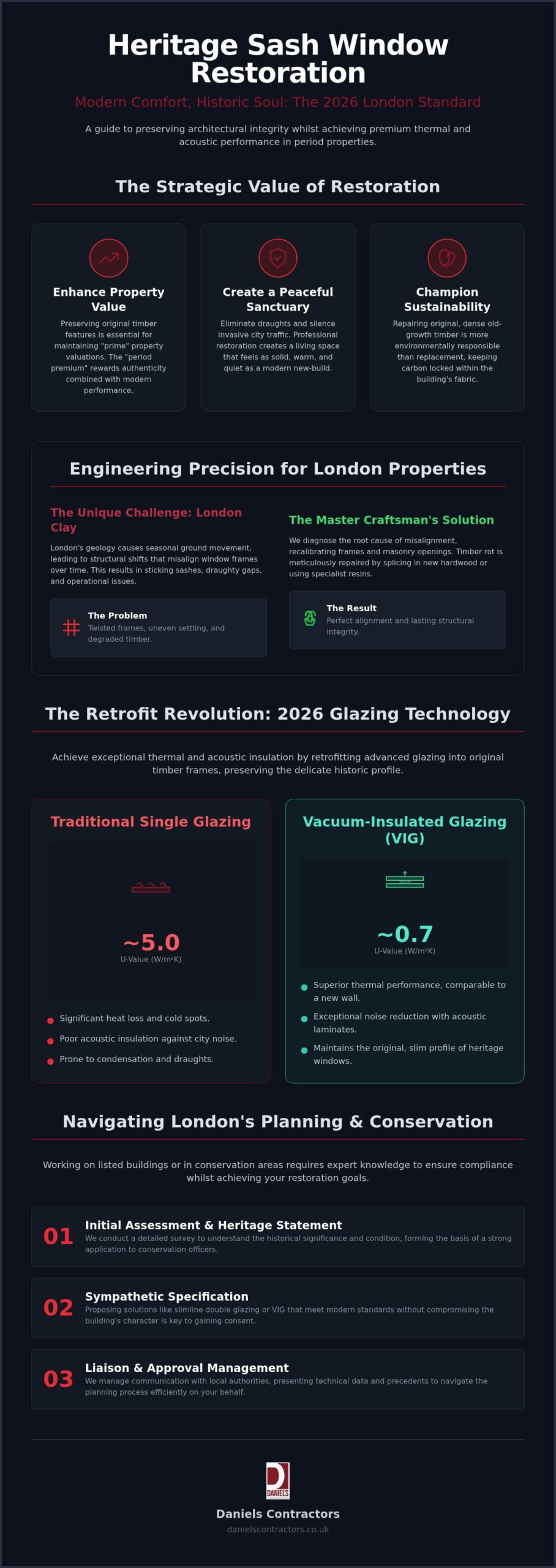
The Retrofit Revolution: Vacuum Glazing and Acoustic Upgrades
The 2026 approach to heritage sash window repair London has moved far beyond the bulky, unsightly double glazing of the past decade. When we undertake a restoration, we now utilise vacuum-insulated glass (VIG), a technology that allows us to retain the slim profiles of original Victorian sashes whilst delivering 21st-century thermal performance. These ultra-thin units eliminate the need for thick, modern spacer bars, ensuring the window’s aesthetic remains indistinguishable from the original single-paned glass. For homeowners in prestigious London postcodes, this represents a seamless marriage of historic charm and uncompromising modern comfort. It’s no longer a compromise between beauty and warmth; it’s a technical triumph that protects the architectural integrity of the capital’s finest residences.
The goal is to achieve a seamless aesthetic where the glass looks like original crown glass, complete with its characteristic reflections, but performs with the efficiency of a solid wall. This level of detail is essential for maintaining the “prime” status of London properties, where even minor visual discrepancies can impact the overall feel of a luxury refurbishment. By integrating these advanced materials, we ensure that the building’s heritage is preserved for the next century without sacrificing the practicalities of modern living.
Vacuum Glazing: The 2026 Standard for Heritage
Vacuum glazing, such as FINEO, represents the current gold standard for heritage restoration. By removing the air between two panes of glass to create a vacuum, we achieve thermal U-values that rival triple glazing within a profile as thin as 6mm to 10mm. This technical leap is particularly significant for properties with strict planning constraints. Conservation officers often approve these units because they fit within original glazing bars, preserving the delicate shadows and reflections that define a period facade. “Slimlite” units provide a similar benefit, allowing double glazing to be retrofitted into original thin sashes that were never designed for the weight of standard modern units.
Acoustic Insulation for Urban Sanctuaries
Securing the necessary approvals for heritage sash window repair London requires a methodical understanding of both national legislation and borough-specific nuances. Whilst genuine like-for-like repairs often don’t require formal consent, any upgrade to thermal performance or material changes must be handled with care. The Planning (Listed Buildings and Conservation Areas) Act 1990 mandates that any alteration to a listed building requires consent. Unauthorised work remains a criminal offence; this makes professional guidance essential from the project’s outset.
Properties in conservation areas face different challenges. Approximately one-fifth of all Greater London homes are located within these zones, where an Article 4 Direction may be in place. This direction removes permitted development rights, meaning you’ll need full planning permission for even minor external changes. We act as a main contractor to manage these complexities, providing the professional heritage statements that conservation officers require to approve modern thermal upgrades.
Borough-Specific Nuances: RBKC vs. Westminster
Expectations vary significantly between neighbouring councils. The Royal Borough of Kensington and Chelsea (RBKC) is famously prescriptive, often requiring a level of technical detail similar to a Basement Construction Method Statement even for window joinery. In contrast, Westminster City Council may be more receptive to vacuum glazing if the visual impact is negligible. Seeking pre-application advice is a prudent step to avoid enforcement notices and ensure your project aligns with local priorities.
Mastering the Consent Process
To ensure a seamless project, we follow a steady, logical progression through the planning system. This includes a meticulous site survey, engaging with officers early, and producing a bespoke heritage statement. For a broader understanding of your property’s potential, you can refer to our permitted development guide. Our five-step roadmap for heritage sash window repair London includes:
- Detailed Survey: Documenting the existing condition and historic significance of each unit.
- Pre-application: Testing the feasibility of upgrades like vacuum glazing with the local officer.
- Heritage Statement: Justifying the proposed works with expert analysis and technical drawings.
- Application Submission: Managing the formal process and communication with the local authority.
- Condition Discharge: Ensuring all planning requirements are met during the restoration phase.
Navigating these regulations is simpler when you partner with a firm that understands the whole building’s integrity. If you are planning a sensitive project, we invite you to explore our professional heritage restoration services.
The Daniels Distinction: Bespoke Restoration as Part of a Master Plan
Daniels Contractors approaches heritage sash window repair London with a perspective that extends beyond the individual frame. Unlike specialist window firms that treat joinery in isolation, we view restoration as a vital component of a property’s structural and aesthetic master plan. Since 2001, we’ve refined a “gentleman builder” philosophy that prioritises transparency, clear communication, and an uncompromising dedication to the craft. This approach ensures that your windows don’t just function perfectly; they harmonise with the broader architectural vision of your home.
Whether your project involves a sensitive restoration or a complex bespoke house extension, we provide the steady hand and technical expertise required for high-end residential work. Our 25-year heritage in the capital means we understand the specific challenges of London’s historic fabric, from Victorian brickwork to the intricacies of conservation law. We act as a reliable partner, ensuring that every detail of the window restoration is integrated into the wider timeline and quality standards of your refurbishment.
Methodical Project Management
We integrate the RIBA Plan of Work into every project to ensure seamless execution from the initial survey to the final coat of heritage paint. This methodical structure provides a single point of contact for both structural and aesthetic work, eliminating the friction often found when managing multiple sub-contractors. Our clients, many of whom are high-net-worth individuals, value the peace of mind that comes from transparent, regular reporting. We translate technical challenges into clear, actionable updates, keeping you informed without the stress of managing the day-to-day practicalities of the site.
Craftsmanship Beyond the Glass
Our commitment to quality manifests in the premium finishes we apply to every sash. We select heritage paint colours and bespoke joinery details that respect the building’s history whilst meeting modern durability standards. We frequently collaborate with architects to ensure that heritage sash window repair London matches the wider design intent of the residence. This holistic focus on detail is why our clients often trust us with their most ambitious projects, including luxury basement conversions and full-scale refurbishments. By treating the window as part of the building’s soul, we deliver results that are both historically authentic and exceptionally high-performing.
Investing in the Longevity of Your Period Home
Restoring your property’s original features is a profound act of stewardship that balances architectural preservation with modern performance. By integrating 2026 vacuum glazing and addressing the structural shifts caused by London clay, you ensure your residence remains a “prime” asset in the capital’s competitive market. The complexity of Grade II listing and conservation areas needn’t be a barrier when you have a methodical partner to manage the heritage statements and planning nuances on your behalf.
Professional heritage sash window repair London is about more than just aesthetics; it’s about creating a thermally efficient, silent sanctuary that stands the test of time. With over 25 years of building excellence in the capital and a specialisation in Grade II listed restorations, Daniels Contractors provides the transparency of fixed-price contracts and the precision of master craftsmen. We invite you to discuss your heritage restoration vision with our master craftsmen. Your residence deserves a legacy that is as functional as it is historic.
Frequently Asked Questions
Do I need planning permission for heritage sash window repair in London?
Genuine like-for-like repairs using original materials typically don’t require planning permission in London. However, if your property is a listed building, you must obtain Listed Building Consent for any alterations that aren’t strictly identical. In conservation areas, you should check for an Article 4 Direction, which may remove permitted development rights. We recommend consulting your local council’s conservation officer before commencing any significant heritage sash window repair London to ensure full compliance with borough-specific regulations.
Can original sash windows be double glazed without changing their appearance?
Modern advancements like vacuum-insulated glass (VIG) allow us to retrofit double glazing into original thin sashes. These units are typically between 6mm and 10mm thick, which is slim enough to fit within historic glazing bars without altering the window’s profile. This technology maintains the delicate reflections of original glass whilst providing thermal performance that rivals triple glazing. It’s an ideal solution for homeowners seeking modern comfort without sacrificing architectural integrity or falling foul of strict planning laws.
How long does a bespoke sash window restoration typically take?
The duration depends on the window’s condition and the complexity of the upgrades. Simple tasks like replacing sash cords can take as little as two hours per unit. A comprehensive refurbishment involving timber splicing, rebalancing, and glazing upgrades usually takes between one and two days per window. We manage these projects methodically to minimise disruption, ensuring each unit is secured and weather-proofed at the end of every working day to maintain your home’s security.
What is the best timber for heritage window repair in 2026?
Accoya is currently considered the gold standard for high-end timber restoration. It’s a modified wood that offers exceptional dimensional stability, meaning it won’t shrink or swell with London’s seasonal humidity. This prevents the sticking and rattling common in older windows. When we perform heritage sash window repair London, we use Accoya for sills and spliced repairs because it’s indigestible to insects and fungi, significantly extending the lifespan of the restored unit compared to traditional softwoods.
Can I stay in my home whilst the sash window repairs are being carried out?
You can certainly remain in your property during the restoration process. Our craftsmen operate with a “gentleman builder” approach, ensuring work areas are kept tidy and disruption is kept to a minimum. We typically work on one room at a time to maintain your privacy and comfort. Unlike large-scale house extensions or basement conversions, window restoration is a targeted process that doesn’t require you to vacate your home or move furniture into long-term storage.
How much value does restoring original sash windows add to a London property?
Authentic restoration protects the “period premium” that drives valuations in London’s prime residential market. Original windows are a key architectural feature that buyers in prestigious postcodes expect to see maintained. Whilst specific percentages vary by borough, properties that retain their historic character whilst offering modern thermal and acoustic performance are significantly more attractive to high-end purchasers. It’s a strategic investment that preserves both the building’s soul and its long-term market value.
What is vacuum glazing and is it suitable for Grade II listed buildings?
Vacuum glazing is a high-performance glass unit where the air between two panes is removed to create a vacuum. This allows for a much thinner profile than standard double glazing, often as slim as 6.7mm. Because it can be retrofitted into original frames without changing the glazing bars, many conservation officers now approve it for Grade II listed buildings. It provides a discreet way to achieve 21st-century insulation standards within a 19th-century facade.
How do you prevent future rot in restored Victorian sash windows?
Preventing rot requires a combination of superior materials and precision engineering. We use resin stabilisation to treat original timber and Accoya for any replacement sections, as these materials are highly resistant to moisture. Ensuring proper drainage through correctly pitched sills and applying high-end, flexible paint systems also prevents water from penetrating the wood grain. Regular maintenance of the paint film is the final step in protecting your investment for decades to come.