
What if the most prestigious room in your London residence isn’t the sun-drenched drawing room, but the forgotten, damp space directly beneath your feet? It’s a common frustration for homeowners who see untapped potential in their property but feel deterred by the daunting complexities of London clay or the intricate planning rules for listed buildings. You might worry that a subterranean project will always feel like a basement, rather than a seamless part of your home’s architectural narrative.
We understand that high-end basement cellar conversions are about more than just reclaiming square footage; they’re an opportunity to craft a bespoke environment that mirrors the elegance of your upper floors. You’ll discover how to turn a subterranean liability into a sophisticated living area that adds substantial market value and functional beauty to your home. This article provides a curated look at the luxury layout ideas defining 2026, exploring everything from private cinemas to wellness retreats, whilst offering expert insight into the structural standards and waterproofing precision necessary for a flawless, dry, and enduring finish.
Key Takeaways
- Learn how to distinguish between basic structural work and high-end basement cellar conversions that enhance both your daily lifestyle and your property’s market value.
- Discover 2026’s leading design trends for subterranean spaces, from private wellness suites to sophisticated home cinemas that integrate seamlessly with your existing architecture.
- Understand the “Gentleman Builder” approach to waterproofing and light, ensuring your new space remains bright, dry, and indistinguishable from the rest of the residence.
- Navigate the complexities of London’s planning regulations and the Party Wall Act with confidence to ensure a smooth, compliant project.
- Explore the benefits of a single, professional point of contact for a transparent, meticulously managed refurbishment from initial design to the final high-end finish.
Understanding Basement Cellar Conversions: Potential and Purpose
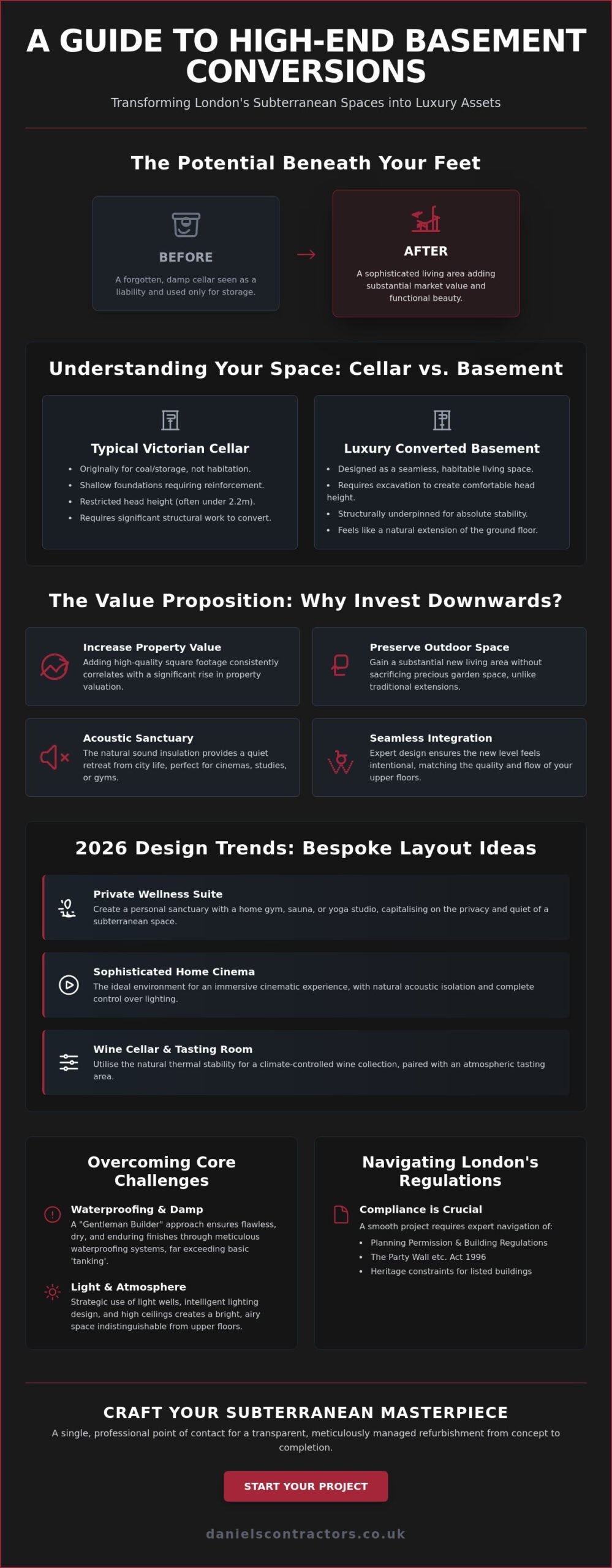
Many homeowners view their subterranean levels as mere storage zones, yet the potential for transformation is immense. A bespoke approach to basement cellar conversions focuses on creating a space that feels like a natural extension of the ground floor. It isn’t just about applying a waterproof coating; it’s about structural integrity and architectural finesse. When we assess a project, we look beyond the existing damp walls to see a canvas for a high-end living area that mirrors the quality of the rest of your home.
Cellar vs. Basement: Which do you have?
In London’s historic terraces, you’ll often find Victorian coal cellars or half-cellars. These were never intended for habitation. They usually feature shallow foundations and restricted head height. A simple conversion might work if you have enough clearance, but most luxury projects require a more intensive basement excavation london. This involves lowering the floor slab to create a comfortable, airy environment. Historically, a Basement was purely functional, but today’s engineering allows us to underpin these period structures with absolute precision, ensuring the building remains stable whilst we create new, habitable volume.
The Value Proposition of Subterranean Living
Why are homeowners in 2026 choosing to go down rather than out? In prime postcodes across London, Surrey, and Essex, space is at a premium. Traditional extensions often sacrifice garden space, whereas subterranean projects preserve your outdoor footprint. There’s also the unique benefit of acoustic isolation. A basement provides a quiet sanctuary away from the hustle of city life, making it the perfect location for a home cinema or a private study. Beyond lifestyle, the financial logic is sound. Adding high-quality square footage in these desirable areas consistently correlates with a significant rise in property valuation. Before committing to a project, understanding the full basement conversion cost is essential to planning your investment with confidence. It’s a sustainable way to grow your home, repurposing the existing building footprint without the need for a completely new build.
A generic “tanking” project often results in a room that feels like a finished cellar; functional, but distinctly separate from the house. Our perspective ensures that basement cellar conversions are executed with a focus on seamless integration. We look at the flow of light, the height of the ceilings, and the quality of the finish to ensure your new room feels intentional. By prioritising structural viability from the start, we eliminate the fear of failure and replace it with the peace of mind that comes from meticulous craftsmanship.
Bespoke Layout Ideas for Luxury Subterranean Spaces
Transforming a Victorian coal cellar into a luxury asset requires a shift in perspective. Instead of viewing the area as a dark, redundant box, we see an atmospheric retreat that offers privacy and quietude unmatched by upper floors. High-end basement cellar conversions succeed when they move beyond mere utility to prioritise “atmosphere”. This involves using bespoke joinery and clever lighting to create a destination within the home, rather than just another room. Whilst narrow footprints in London terraces can be challenging, a tailored layout ensures every square inch serves a purpose, from hidden storage to recessed feature walls.
Integrating these subterranean levels seamlessly with the rest of your residence is a hallmark of the “Master Craftsman” approach. The transition should feel effortless, achieved through a continuity of materials and a staircase design that draws the eye downward. Before finalising your vision, it’s wise to consult the Planning Portal guidance on basements to understand how layout choices might interact with building regulations. If you’re beginning to envision the possibilities for your own home, our team can help you refine these concepts into a workable design that respects the heritage of your property.
The Connoisseur’s Wine Cellar and Tasting Room
Home Cinemas and Private Wellness Suites
The Subterranean Home Office or Library
Overcoming Environmental Challenges: Light and Waterproofing
Creating a sophisticated subterranean space requires more than just aesthetic vision; it demands an uncompromising approach to engineering. For high-end basement cellar conversions, the “Gentleman Builder” philosophy dictates that technical excellence must precede interior decoration. We don’t merely apply a basic sealant and hope for the best. Instead, we implement robust systems designed to protect your investment for decades. A dry, stable environment is the essential foundation for the bespoke joinery and fine finishes that define a luxury basement conversion London.
Advanced Waterproofing: Types A, B, and C
The British Standard BS 8102:2022 emphasises a risk-based approach to waterproofing. For luxury residential projects, we typically recommend a dual-protection strategy. Type A (barrier protection) involves external or internal membranes that block water ingress. Type B (integrated protection) uses water-resistant concrete structures. However, Type C (drained protection) is often the preferred choice for high-value interiors. This system utilises internal cavity membranes to manage water flow behind the walls, directing it into perimeter drainage channels and silent sump pumps. This method ensures that even if a minor leak occurs in the outer structure, your internal plasterwork and silk wallpapers remain untouched. It’s a methodical, reliable solution that offers total peace of mind.
Architectural Light Solutions
The fear of a dark, oppressive atmosphere is a common barrier for homeowners. We overcome this by treating light as an architectural element rather than an afterthought. Walk-on glass floor panels are a particularly effective solution for London terraces, allowing natural light to cascade from ground-floor windows into the level below. This “borrowed” light transforms the perceived volume of the space. Additionally, we design elegant lightwells that can double as small, subterranean courtyards. These features provide essential ventilation and a visual connection to the outside world. For areas where structural lightwells aren’t feasible, advanced “sun pipes” and circadian LED systems can mimic the natural progression of daylight, supporting your well-being throughout the day.
Maintaining air quality is just as vital as managing light. We integrate Mechanical Ventilation with Heat Recovery (MVHR) systems to ensure a constant supply of fresh, filtered air whilst maintaining perfect thermoregulation. This prevents the “stale” feeling often associated with older basement cellar conversions. By combining these invisible technologies with meticulous craftsmanship, we create a climate-controlled sanctuary that feels as fresh and vibrant as any upper-floor room. It’s this dedication to the unseen details that ensures your new living area remains a masterpiece of both form and function.
Navigating Planning and Heritage Constraints
Securing the necessary approvals for basement cellar conversions requires a methodical approach, particularly in the historic boroughs of London or the leafy streets of Surrey and Essex. Whilst internal work to an existing cellar sometimes falls under permitted development rights, any structural alteration or external addition like a lightwell usually demands formal planning permission. Our team manages this complexity by liaising directly with local authorities from the earliest design stages. We understand the specific structural challenges posed by London clay and ensure our proposals are backed by rigorous engineering data to provide peace of mind to both homeowners and planning officers.
Grade II Listed and Conservation Area Nuances
For those undertaking a victorian house refurbishment london, the stakes are even higher. Heritage officers apply a “substantial harm” test to subterranean excavations to ensure the building’s historical fabric isn’t compromised. It’s often possible to restore original vaulted brick ceilings whilst meeting modern Building Regulations for fire safety and insulation. This delicate balance requires a visionary who respects the past but understands the practicalities of 2026 construction standards. We work closely with heritage specialists to approve bespoke structural alterations that preserve the home’s soul whilst introducing high-end, modern functionality. It’s about ensuring the new space feels like a natural chapter in the property’s history.
The Party Wall Process
In dense urban environments, your project will almost certainly affect a shared structure. A Party Wall Agreement isn’t just a legal formality; it’s a vital tool for maintaining positive relations with your neighbours. You’ll need to serve notice to any adjoining owners if your work involves underpinning or excavating near their foundations. We recommend commissioning professional schedules of condition before any work begins. This provides a transparent record of the neighbouring property’s state, protecting both parties and ensuring the construction phase proceeds with mutual respect. Managing these human elements is just as important as the structural engineering itself. It prevents avoidable delays and ensures the project remains a positive experience for everyone involved.
If you’re concerned about how these regulations might impact your vision, our team provides the expert guidance needed to move forward with confidence. We can help you navigate the complexities of heritage status and local planning to ensure your basement cellar conversions are both compliant and beautiful. Contact us for a professional consultation to explore the full potential of your subterranean space.
The Daniels Approach: Crafting Your Subterranean Masterpiece
At Daniels, we believe that the true measure of a luxury project lies in the details that remain unseen. While the previous sections explored the visionary layouts and technical requirements for basement cellar conversions, the success of these subterranean masterpieces depends entirely on the integrity of the execution. We approach every project with the mindset of a Master Craftsman, ensuring that the structural work beneath the surface is performed with the same precision as the final decorative flourishes. This commitment to grounded reliability is what allows us to transform a challenging subterranean space into a seamless, high-end extension of your home.
The longevity of any underground project is defined by the precision of the “hidden” work. Whether it’s the meticulous application of the cavity membrane or the structural underpinning of original foundations, we don’t cut corners. We understand that for our clients, peace of mind is just as important as the aesthetic outcome. By combining the technical expertise of a developer with the personal touch of a boutique service provider, we ensure that your investment is protected by a structure built to the highest possible standards. Before work begins, it’s worth reviewing our ultimate vetting checklist for selecting basement builders in London to understand the credentials and professional standards that distinguish true specialists from standard contractors.
Seamless Project Delivery
Organising complex site logistics in restricted London locations requires a methodical, steady hand. We understand that a major refurbishment can be disruptive, so we prioritise a transparent project management style that keeps you informed at every stage. By providing a single point of contact from the initial design phase through to the high-end finishing, we eliminate the confusion often found in multi-contractor builds. We collaborate closely with architects and interior designers to ensure the structural reality aligns perfectly with the aesthetic vision, whilst managing the practicalities of waste removal and material delivery with minimal impact on your daily life. This steady rhythm ensures the project moves from vision to reality without unnecessary stress.
Final Finishes and Quality Assurance
Precision is our standard, not an optional extra. We invite you to view our portfolio of luxury transformations across the capital to see how we’ve helped other homeowners realise their property’s hidden potential. If you’re ready to discuss your vision for a bespoke cellar transformation, our team is here to provide the expert guidance and meticulous skill your project deserves. Contact us to begin the journey of crafting your subterranean masterpiece.
Elevating Your Home’s Subterranean Potential
Subterranean transformation is more than a structural necessity; it’s an architectural opportunity to redefine the luxury of your London home. We’ve explored how the right layout, from climate-controlled wine rooms to private wellness retreats, can turn a dark cellar into a sophisticated sanctuary. Success relies on the invisible details: the dual-protection waterproofing, the architectural lightwells, and a deep respect for heritage constraints. When executed with precision, these spaces become the most atmospheric rooms in the residence.
Since 2001, we have delivered luxury developments across the capital, establishing ourselves as specialists in the restoration of Grade II listed buildings. Our approach centres on peace of mind, providing transparent, fixed-price construction contracts that ensure your vision is realised without compromise. High-end basement cellar conversions require a partner who values craftsmanship as much as you do, ensuring every structural and aesthetic detail is handled with care. Choosing the right team is paramount, and our guide to vetting qualified basement builders in London outlines the essential credentials and questions every homeowner should consider before committing to a contractor.
When you’re ready to unlock the hidden value beneath your property, we’re here to guide you through every technical and creative decision. Discuss your bespoke basement project with our expert team to begin crafting a space that truly reflects your lifestyle. Your subterranean masterpiece is closer than you think.
Frequently Asked Questions
Do I need planning permission for a cellar conversion in London?
Internal work to an existing cellar is typically considered permitted development, yet any external alterations or new excavations almost always require formal planning permission. If you are lowering the floor level or adding lightwells, your local London borough will need to approve the plans. We recommend checking with your local authority early, especially if your property is Grade II listed or situated within a conservation area.
How much value does a basement conversion add to a house in 2026?
A high-quality conversion in a prime London postcode can add between £80,000 and £250,000 to the market value of a residence. This figure depends on the quality of the finish and the functionality of the new space. In areas where garden space is limited, adding subterranean square footage is one of the most effective ways to increase a property’s valuation whilst preserving its outdoor footprint.
Is it possible to convert a cellar if it currently has damp issues?
Existing damp issues are a standard starting point for most basement cellar conversions and are fully resolvable through professional engineering. We utilise advanced waterproofing systems that comply with BS 8102:2022 to ensure the space remains permanently dry. These methods manage moisture ingress effectively, allowing for high-end interior finishes that won’t be compromised by the subterranean environment.
How long does a typical bespoke cellar conversion take to complete?
A bespoke conversion usually takes between 12 and 20 weeks to reach completion, depending on the complexity of the structural work. The initial phase involves excavation and waterproofing, which takes approximately 6 to 10 weeks. The remaining time is dedicated to the high-end fit-out, including bespoke joinery, lighting, and final decorative finishes that match the rest of your home.
Can I stay in my home whilst the cellar conversion is being built?
It is often possible to remain in your property during the construction phase, provided the site has independent external access for the building team. Whilst we strive to minimise disruption, homeowners should expect some noise and vibration during the structural excavation period. We manage site logistics meticulously to ensure that your daily life remains as comfortable as possible throughout the project.
What is the difference between tanking and a cavity drain system?
Tanking creates a rigid, waterproof barrier on the internal walls to block water, whereas a cavity drain system manages water flow behind a membrane. Tanking can be susceptible to pressure and cracking over time, which is why we often favour cavity drain systems for luxury projects. These systems direct moisture into managed drainage channels and silent sump pumps, providing a more reliable long-term solution.
Do I need a Party Wall Agreement for a simple cellar conversion?
A Party Wall Agreement is legally required if your conversion involves underpinning or any structural work that affects a shared boundary wall. Even if the work seems minor, you must serve notice to your neighbours at least two months before construction begins. This process protects both parties and ensures that a professional schedule of condition is recorded before any excavation starts.
What are the building regulations for a habitable basement room?
Habitable basement rooms must comply with strict Building Regulations regarding fire safety, ventilation, and thermal efficiency. This includes providing a safe means of escape, usually through a window or door leading to a lightwell, and ensuring adequate airflow through mechanical ventilation. Additionally, the space must meet specific insulation standards to ensure it is as energy-efficient as the upper floors of the house. For a detailed breakdown of what to budget for these requirements, our guide to basement conversion cost in 2026 provides a comprehensive overview of all associated expenditures.